A utility outage can turn a normal evening into a costly disruption quickly. Refrigerated food is at risk, medical devices need power, garage doors may not operate, and a home office can go dark without warning. Battery storage for outages gives homeowners a practical way to keep critical parts of the home powered while the grid is down – without relying on a noisy fuel-powered generator.
The right battery system does more than provide emergency electricity. It can store solar energy for use after sunset, reduce purchases of expensive utility power, and give you more control over how your home uses energy. But backup performance depends on system design. A battery that is perfect for essential loads may not be designed to run every major appliance in a large home for several days.
What battery storage does during an outage
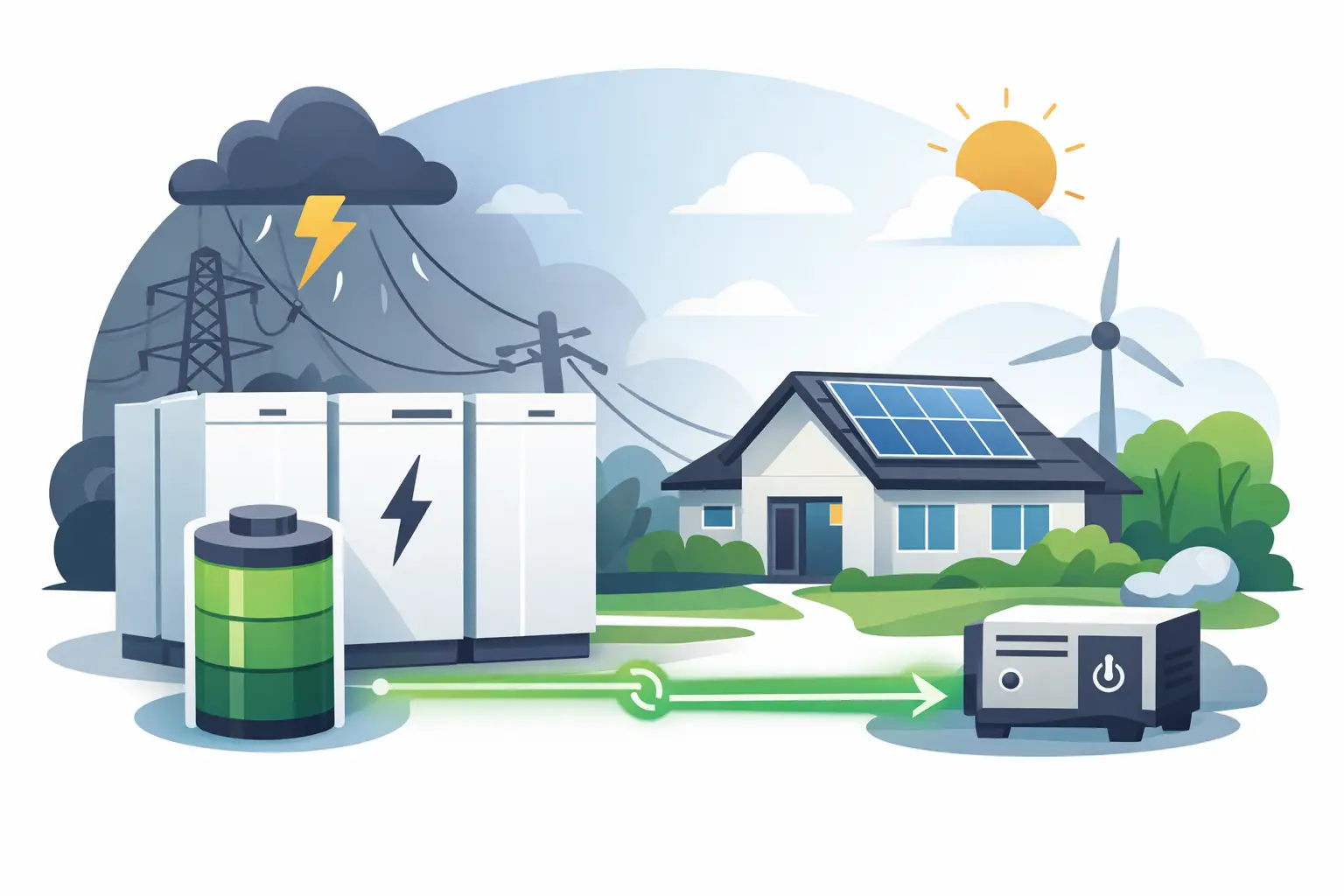
When the utility grid fails, a properly installed home battery detects the outage and separates your home from the grid. This prevents electricity from flowing back onto utility lines while crews are working. The battery then supplies selected circuits or, with the right equipment and capacity, much of the home.
The transition is typically automatic. You do not need to roll out extension cords, refuel equipment, or be home when an outage begins. Your lights, refrigerator, Wi-Fi, security system, and other chosen loads can remain operational based on the backup plan built into your system.
Solar panels alone usually do not provide outage power. Standard grid-tied solar systems are required to shut down during an outage for safety. Adding battery storage and the appropriate backup controls is what allows solar generation to support your home when the grid is unavailable.
Battery storage for outages starts with your priorities
The first question is not simply, “How many batteries do I need?” It is, “What needs to stay on?” That distinction drives the cost, battery capacity, electrical design, and expected runtime.
Many homeowners choose essential-load backup. This approach places priority circuits on a protected subpanel, often including the refrigerator, kitchen outlets, lights, internet equipment, garage door, select bedroom outlets, and a gas furnace blower. It is a focused, cost-conscious strategy that covers the equipment most people depend on during a short outage.
Whole-home backup provides broader coverage and may keep central air conditioning, electric cooking, well pumps, pool equipment, or other large loads available. It requires more battery capacity and often more electrical planning. In homes with high-demand equipment, the system may use smart load controls that temporarily limit less-critical appliances so the battery is not overloaded.
There is no one-size-fits-all answer. A family in an area with brief, occasional outages may be well served by one battery and a critical-load panel. A household in a wildfire-prone region, an area affected by hurricanes, or a rural location with frequent utility interruptions may need multiple batteries, solar charging, and a more comprehensive backup plan.
Power and capacity are different measurements
Battery shopping can be confusing because two numbers matter: power and energy capacity.
Power, measured in kilowatts, tells you how much electricity the battery can deliver at one time. This determines whether the system can start and run demanding equipment. A refrigerator, microwave, sump pump, and air conditioner can each create momentary surges when they turn on. If the battery’s power output is too low, it may not support those loads together even if the battery has plenty of stored energy.
Energy capacity, measured in kilowatt-hours, tells you how much electricity is stored. This affects runtime. A battery with 13.5 kWh of usable capacity may keep modest essential loads running for many hours, but runtime changes dramatically with usage. Running a few lights, a refrigerator, and Wi-Fi is very different from operating central AC, an electric dryer, or a spa.
A qualified design should account for both measurements. It should also consider your household’s actual energy habits, the size of your solar system, local outage patterns, and any future plans such as an EV charger or electrified HVAC equipment.
A quick way to think about runtime
During an outage, conservation extends battery life. If your protected loads average 1 kW, a 13.5 kWh battery may provide roughly 13 hours of energy before accounting for operating limits and system losses. If those loads average 3 kW, the same battery may last closer to four hours.
That is why “whole-home backup” can mean different things from one property to another. A carefully managed whole-home system may keep a home comfortable for a long period. A home using multiple high-energy appliances at once can drain the same storage much faster.
Solar can extend outage protection
Pairing solar with storage changes the equation. During daylight hours, solar panels can recharge the battery while also serving active household loads. With enough sunlight and thoughtful energy use, a solar-plus-storage system can provide backup for much longer than a battery operating on stored energy alone.
Still, solar is not a promise of unlimited power. Production depends on the weather, season, roof orientation, shading, and panel capacity. A cloudy winter day may produce far less energy than a clear summer day. During a multi-day outage, homeowners get the best results by treating battery power as a managed resource: run high-demand appliances strategically, avoid unnecessary loads, and use solar charging hours wisely.
For customers who want maximum resilience, a solar battery system can also be designed alongside a generator connection or other backup strategy. The best setup depends on the duration and severity of outages in your area, as well as how much of the home you want protected.
Equipment that deserves special planning
Some appliances have outsized impact on battery sizing. Central air conditioners, electric resistance heat, electric water heaters, clothes dryers, ovens, pumps, and EV chargers can consume significant power. That does not mean they must be excluded, but they should be addressed early in the design process.
Modern smart panels and load-management devices can make a major difference. They can prioritize essential circuits and reduce or pause certain loads when battery demand is high. For example, a system may keep the refrigerator, lights, medical equipment, and internet on while temporarily limiting pool equipment or EV charging.
This level of control can reduce the need to oversize a battery system simply to cover occasional peak demand. It also gives homeowners a clearer picture of how energy is being used during both normal operation and outages.
Installation quality matters as much as battery capacity
A battery is not an appliance you simply plug in and forget. Reliable backup depends on electrical engineering, proper permitting, code-compliant installation, utility requirements, and commissioning. The installer must evaluate the main electrical panel, solar equipment, grounding, backup interface, circuit priorities, and physical placement of the battery.
Roof condition can matter, too. If a solar project requires roof work in the near future, handling that work before or alongside solar and storage installation can prevent unnecessary removal and reinstallation later. A full-service provider can coordinate solar generation, battery backup, electrical upgrades, and roof readiness as one project rather than leaving the homeowner to manage several contractors.
LA Solar Group designs integrated energy systems around the way each property uses power, helping homeowners weigh backup needs against long-term utility savings and available financing options.
What to ask before choosing a backup battery
Before signing off on a battery design, make sure you can get clear answers to these practical questions:
- Which appliances and circuits will operate during an outage?
- How many hours of runtime should I reasonably expect under typical use?
- Can solar recharge the battery while the grid is down?
- What happens if several large appliances turn on at once?
- Can the system be expanded later if my energy needs grow?
- Are permits, inspections, utility coordination, and ongoing service included?
The answers should be specific to your home, not generic claims based on battery size alone. A good proposal shows the difference between essential-load and whole-home protection, explains the assumptions behind runtime estimates, and identifies any appliances that require active load management.
A better backup plan begins before the next outage
Battery storage is most valuable when it is designed around the moments you cannot afford to lose power. Whether that means protecting medication, keeping a business-connected home office online, preserving food, or maintaining comfort during extreme weather, the right system gives you a dependable plan instead of a scramble. Start with the loads that matter most, then build a solar and storage solution that can protect them when the grid cannot.