
Are there ways to transport Solar Energy be Transported?
Could Solar Energy be Transported?
Many people have wondered why it’s not possible to load up deserts with hundreds of solar cells and transfer the power to cities across the globe. It is possible that the West Coast could be powered by huge regions of Arizona as well as New Mexico, while the Sahara could be used to power Northern Africa and Southern Europe. It hasn’t yet happened however, it does raise the question: can the solar power be transferred?
While it is feasible to transport solar energy from one place to the next however this will result in prohibitive costs and loss of electricity due to resistance. Engineers will have to adjust the voltage to address this issue.
Because the current solar panels are not very efficient, it would be impossible to produce enough. They’re ideal for powering businesses, homes and homes however they’re not ideal for big cities.
What is Energy Storage?
Solar Energy Storage refers to technologies that can collect energy and then store the electricity in another form (chemical or thermal) before making it available when it is needed. One of these technologies is lithium-ion batteries. Although energy storage will never fully efficient, some energy is lost through the conversion and retrieval of energy. But, energy storage can allow to use energy in a variety of ways at different times from when it was first generated. Storage can improve the resilience of the system and improve efficiency, as well as improve power quality by matching demand and supply.
Energy capacity (the total amount of stored solar energy) and power capacity (the amount of energy that is available at any given moment) are two distinct terms. You can use different storage capacities to handle various jobs. A solar power plant will operate without issue even when there is a fluctuation in the output of its system due to passing clouds. However, long-term storage could be utilized to power for weeks or days when the sun isn’t producing enough energy or there is a significant weather storm.
The advantages of combining storage and solar
Balancing the load of electricity – With no storage, electricity needs to be produced and consumed at the same time. This may mean that Grid operators “curtail” some of the generation in order to avoid over-generation or reliability problems. There are times after sunset, or on days with cloudy skies where the sun is not producing as much production but there is still a lot of power demand. Storage is a method to keep power in reserve. It can be charged or filled when there is little production and a low power consumption. It is then dispensed or used when there is a lot of demand or demand. The energy produced by the sun could be stored so that it is accessible to grid operators whenever they need it. This is why storage can serve as an insurance against the sun’s rays.
“Firming” Solar generation
This is short-term storage that can be used to ensure that rapid changes in solar generation aren’t detrimental to the output of a solar power plant. A small battery, for example, can be used to aid in helping grids maintain a stable and constant power supply.
Resilience
Storage and solar can provide power backup in the case of an electrical failure. They can ensure that vital facilities are running to supply vital services such as communications. You can also use solar and storage for microgrids as well as smaller-scale devices like mobile power units that can be carried around and portable phones.
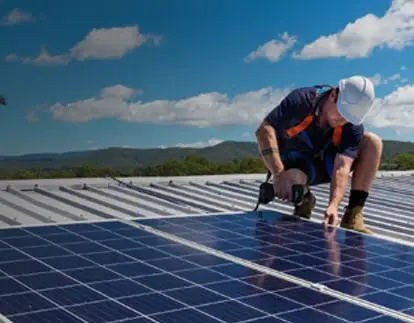
Could Solar Energy be transported wirelessly?
Solar thermal power conversion is a technique that converts solar energy into heat without the need for wires. The sun’s energy would be converted to heat, which will then make steam from water. The steam will then power an electric generator.
Although it is possible to convert solar energy into an alternative form of energy which can be used to transport, it is not being implemented on a sufficient size provide power to more than a small town.
This is because solar panels are only being around 20% efficient in the conversion of sunlight into electricity. That means only 20 percent of the sunlight hitting a solar panel is converted to usable energy for every 100.
In order to produce enough power to power [region] or”region,” it will require a large amount in solar panels. Then transport the energy over vast distances.
Scientists are currently working on a solution to this problem. They are trying to find innovative methods of storing and transporting solar power.
Can Solar Power be Stored and transported?
There are a variety of ways that the solar energy can be stored, and then transported to other locations. There are numerous ways that solar power could be stored or moved however, not all of them can transport on a massive scale.
Energy storage of various kinds
Pumped Hydropower is the most widely used form of energy storage that is used by electricity grids. The most popular storage method that is used in conjunction in solar power stations is hydropower pumped. Flywheels and compressed air storage may provide different storage options, like fast discharge or huge capacities, which makes them attractive to grid operators. Below are additional details on other storage types.
Pumped-Storage Hydropower
A technique that stores energy using water, pumped-storage hydropower is a type stored energy. If the energy demand is not high the use of electricity to pump water into reservoirs. The water then flows downhill and turn a generator that produces electricity for high demand. Pumped hydro, a tried and tested storage technology which has been used throughout the United States since 1929, is well-tested. It requires appropriate areas and reservoirs. They could be natural or artificial lakes. This type of technology requires long regulatory approvals and long execution times. The time to payback for financial investment in pump hydro is typically long because of the lack of realization of the value of its services to integrate variable renewables. These are only one of the main reasons why pumped-hydro hasn’t been developed in the last few years despite the fact there is a lot of interest in it from those who have applied to obtain preliminary licenses or permits from the Federal Energy Regulatory Commission.
Electrochemical Storage
A lot of individuals are acquainted with the electrochemical battery technology that is used in laptops and mobile phones. The battery stores energy by causing an chemical reaction whenever electricity is introduced into it. The energy-producing chemical reaction that takes place when a battery is charged is reversed. This causes voltage between two electrical contacts, causing current to flow through the battery. Although lithium-ion is the most popular chemistry for batteriesbut there’s also other options such as lead-acid and sodium.
Thermal Energy Storage
A range of technologies that uses thermal energy storage to store heat is water, molten salt , or another fluid. This material for thermal storage is kept in a sealed container until it is used. It can be used to cool or heat, or{ you could|| even} generate electricity. The heat utilized to heat water in thermal energy storage systems designed to generate electricity. The steam produced drives a turbine, which in turn produces electricity using the same equipment{ as|| that is} utilized in traditional electricity generation stations. CSP plants make use of thermal energy storage to store heat. This is due to the receiver focusing sunlight on that working liquid. In the context of working fluids, supracritical carbon dioxide (SCD) is being studied. This could lead to higher temperatures and decrease in the overall size of the generating plant.
Storage for the Flywheel
Flywheels are heavy , rigid wheels connected with rotating shafts. They can be turned faster because it consumes energy. An electrical generator is able to extract the energy it needs by attaching to the wheel. This uses electromagnetism and slows the wheel down to create electricity. Flywheels can provide energy quickly, however they’re not able to store energy in large quantities.
Air storage in compressed form
The large vessels can be used for storage of compressed air. The compressor pumps pressurized air inside the containers. This compressed air then released to drive a turbine which produces electricity. The compressed air energy storage systems that are in operation often release the air to generate electricity as part the natural gas power cycle.
Solar Fuels
The sun’s energy can be utilized to create new fuels. These can be burned or used to produce energy. Researchers are currently researching hydrogen, which is made by the separation of hydrogen from oxygen in water and methane, which is made by combining carbon dioxide and hydrogen. Natural gas is mostly composed of methane, which is used to heat homes or create electricity.
Virtual Storage
Also, you can store the solar power by changing the method you use the devices you already have. The building could become “stored” with thermal power by cooling or heating it prior to the peak of electrical demand. This allows it to not be reliant on electricity in the afternoon. By storing warm or cool air, the building acts as a thermos. Similar processes can be used to distribute demand across the day by using water heaters.
Residential and commercial customers, as well as utility companies and large-scale solar operators, could benefit from storage systems that incorporate solar. As research advances and costs for solar large-scale storage of energy fall, solar and storage remedies are becoming more affordable.
All sound wonderful however they aren’t capable of being shipped and stored in huge quantities. It’s just a matter of time before solar energy can be transported around the world thanks to recent advances of solar energy storage and renewable energy technology.
Another barrier that is not related to science is instability in the government.
Although it is somewhat off topic, it is referring to another motive for transporting solar energy around throughout the globe…government instability.
The majority of countries are able to get along or tolerate one another as a whole. This is especially true for countries which produce energy (coal, oil and batteries). It is not in anyone’s best interests to disturb the status quo, have people from another country rebel and overthrow their government and then not buy energy from them.
Although solar energy can be stored and transported in various ways, none is currently feasible. It’s only a matter time before new designs and storage methods to store solar power are created by scientists.
