
A low electric bill gets attention fast. So does a summer outage when the neighborhood goes dark and one house still has lights, refrigeration, and Wi-Fi. That is why residential solar systems keep moving from nice-to-have to serious home upgrade for homeowners who want lower utility costs, more control, and a stronger long-term return on their property.
The key is knowing what makes one system a smart investment and another a frustrating one. Solar is not just panels on a roof. It is a full home energy setup that has to match your usage, your utility rate, your roof condition, and your goals. If you want the best result, you need a system designed around the house you actually live in, not a generic sales pitch.
What residential solar systems really include
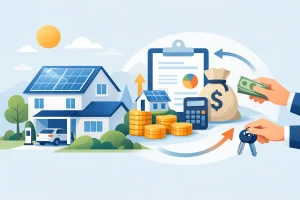
Most homeowners start by thinking about panels, but the panel array is only one part of the project. Residential solar systems usually include solar modules, inverters, racking, electrical equipment, monitoring software, and the permitting and utility approval needed to connect the system to the grid. Depending on the home, the project may also involve a main panel upgrade, roof work, battery storage, or an EV charger.
That broader view matters because performance depends on how those parts work together. Premium panels alone do not guarantee better savings if the inverter is mismatched, the roof has shade problems, or the electrical setup limits expansion later. Good design protects production. Good installation protects safety, warranty coverage, and long-term reliability.
For many homeowners, the most valuable systems are the ones that solve more than one problem at the same time. Lower bills are the starting point, but pairing solar with storage, load management, or a smart panel can also improve backup capability and give you more control over when and how your home uses power.
Why homeowners are choosing residential solar systems now
The decision usually comes down to economics first. Utility rates have not been moving in the homeowner’s favor, and in many markets they are rising fast enough that waiting has a real cost. Every month spent buying expensive grid power is a month you are not building value through your own energy system.
There is also a timing factor tied to incentives and policy. Tax credits can significantly improve project economics, but local utility structures and net metering rules can change. In some areas, the strongest savings now come from adding battery storage rather than relying on old assumptions about sending excess power back to the grid. That is why current design strategy matters more than recycled advice from a few years ago.
Backup power is another major driver. Homeowners who work from home, store medications, run well pumps, or simply want a more resilient house often see solar and batteries as part of a practical reliability plan. Solar without storage can still reduce bills very effectively, but if outage protection is a priority, a battery should be part of the conversation from the start.
How savings are calculated
The simple version is that solar lowers the amount of electricity you need to buy from the utility. The better your system lines up with your home’s usage profile and local rate structure, the stronger the savings can be.
But the math is not one-size-fits-all. Two homes on the same street can see different results depending on panel placement, shade, annual consumption, time-of-use billing, and whether they use more power during the day or at night. A homeowner with a pool, central air, and an EV may have a very different solar strategy than a homeowner with lower daytime demand.
The best proposals account for your past electric bills, your future plans, and your utility rules. If you expect to add an EV charger, replace a gas appliance with electric, or install air conditioning later, that should be built into the design. Underbuilding a system can leave savings on the table. Overbuilding can make less financial sense if local export rates are weak.
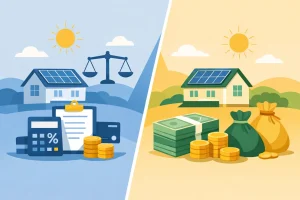
Financing also affects the outcome. Paying cash may maximize long-term return, but financed systems can still produce strong monthly savings if structured properly. For many households, the practical question is not just total payback. It is whether the solar payment is lower than the utility bill it replaces.
What makes a residential solar system worth the investment
Production starts with the roof. Orientation, pitch, available space, and shade all influence performance. South-facing roof sections often get the most attention, but east- and west-facing layouts can still perform well depending on your location and utility rates. A qualified installer should model production instead of relying on rough guesses.
Roof condition matters just as much. If the roof is near the end of its life, it may be smarter to address roofing before installation rather than remove and reinstall the system later. Homeowners often overlook this point, then pay more down the line. A provider that can evaluate both solar and roof readiness helps avoid that problem.
Equipment quality matters too, though not always in the way people assume. The highest-watt panel is not automatically the best fit. Reliability, warranty strength, inverter compatibility, and real-world performance under heat all matter. In hot, solar-heavy states, those details can affect long-term value more than a spec sheet headline.
Installation quality is where a project often succeeds or fails. Clean electrical work, proper flashing, accurate permitting, and responsive post-install support do not sound flashy, but they directly affect safety and customer experience. That is one reason many homeowners prefer working with an established full-service company instead of stitching together roofing, electrical, financing, and solar through separate vendors.
Solar only or solar plus battery?
This depends on your goals. If your priority is lowering monthly power costs, a grid-tied solar-only system may be the right move. It is typically less expensive upfront and can still produce meaningful savings over time.
If your priority includes outage protection, rate arbitrage, or keeping critical loads running during blackouts, battery storage becomes far more compelling. In some markets, batteries also improve financial performance by letting homeowners use more of their own solar energy when utility rates are highest.
There is a trade-off. Batteries add cost, and not every household needs whole-home backup. Some homeowners choose partial backup for essentials like refrigeration, lights, internet, medical devices, and a few outlets. Others want broader coverage, which requires larger storage capacity and a more detailed load plan. The right answer depends on what you need powered, how often outages happen, and how much independence you want from the grid.
Common mistakes homeowners should avoid
The biggest mistake is shopping on price alone. Low bids can look attractive until they leave out electrical upgrades, use lower-tier equipment, or provide weak service after the installation is complete. Solar is a long-term asset. The company behind it matters.
Another common mistake is ignoring future electrification. If you plan to add an EV, heat pump, induction range, or battery later, your solar project should be designed with that in mind. Home energy is becoming more integrated, and a system that cannot scale can become a limitation.
Homeowners also get into trouble when they focus on offset percentage without understanding utility policy. A 100 percent offset does not always mean a zero bill, and a smaller system with better timing and storage strategy can sometimes perform better financially than a larger export-heavy system.
This is where experience matters. A company that handles design, installation, service, and supporting upgrades under one roof can usually spot issues earlier and present a clearer path forward. That is a big reason homeowners choose providers like LA Solar Group when they want premium equipment, strong value, and a process that does not get handed off in pieces.
What to expect from the process
A well-run solar project should feel organized, not confusing. It begins with an evaluation of your energy usage, roof condition, and electrical setup. From there, the design team builds a system around your home and your goals, whether that means reducing bills as much as possible, adding storage for outages, or preparing for future electrification.
Once the design is approved, the project moves through permitting, utility coordination, installation, inspection, and permission to operate. Timelines vary by jurisdiction and utility, which is why clear communication matters. Homeowners should know what stage the project is in, what is needed from them, and what comes next.
After the system is turned on, monitoring and support become the next priority. Solar is low-maintenance, but low-maintenance does not mean no-service. If production drops, an inverter alerts, or the homeowner wants to add storage later, having a responsive service team is part of the value.
Residential solar systems work best when they are treated as a complete home upgrade, not a commodity purchase. The right system can lower costs, improve resilience, and make the house more efficient for years to come. If you approach the decision with clear goals and the right partner, solar stops feeling like a pitch and starts looking like one of the smarter upgrades you can make.