A lower electric bill usually gets the conversation started. Then the real questions show up fast: What goes on the roof, what happens to your meter, how long does installation take, and is the savings actually worth it? If you have been asking what is residential solar installation, the short answer is simple – it is the process of designing and installing a solar power system for a home so it can generate its own electricity.
That simple answer only goes so far. A residential solar installation is not just a few panels bolted to a roof. It is a complete home energy upgrade that includes system design, permits, equipment selection, utility coordination, installation labor, inspections, and long-term performance planning. For many homeowners, it also opens the door to battery storage, EV charging, electrical panel upgrades, and better control over rising utility costs.
What Is Residential Solar Installation and How Does It Work?
Residential solar installation is the full process of adding a solar energy system to a house. The goal is to convert sunlight into usable electricity that powers your home. Most systems are grid-tied, which means your home still stays connected to the utility grid while your solar panels generate energy during the day.
Here is how the system works in practical terms. Solar panels collect sunlight and produce direct current electricity. An inverter converts that electricity into alternating current, which is what your home uses. Your electrical panel distributes that power to lights, appliances, and devices throughout the house. If the system produces more power than your home needs at that moment, that excess electricity may flow back to the grid, depending on your utility arrangement. If your system is paired with a battery, some of that extra energy can be stored for later use instead.
The key point is that residential solar installation is not one product. It is an integrated system designed around your roof, your energy usage, your utility rates, and your long-term goals.
What Is Included in a Residential Solar Installation?
A professionally installed home solar system typically includes solar panels, an inverter, mounting hardware, electrical wiring, and monitoring software. It may also include battery storage, a smart electrical panel, roof work, or an EV charger if the home needs a more complete energy setup.
The design side matters just as much as the equipment. Before installation, a provider reviews your roof condition, shading, orientation, electricity usage, structural requirements, and local code rules. That is why two homes on the same street can end up with very different system designs. One may need a straightforward rooftop array. Another may need roof repairs first, a main panel upgrade, or a battery to get the performance the homeowner wants.
This is also where quality and experience make a real difference. A low price on paper does not help much if the system is undersized, poorly laid out, or installed without planning for service access, warranty support, or future upgrades.
The Residential Solar Installation Process
For most homeowners, the process starts with a consultation and utility bill review. The installer uses that information to estimate system size, production, financial savings, and available incentives. If the numbers make sense, the next step is site evaluation. That can involve roof measurements, photos, electrical review, and sometimes drone or satellite modeling.
After the design is finalized, the project moves into permitting and utility approval. This stage can feel slower than homeowners expect because local jurisdictions and utilities each have their own timelines. In many cases, the physical installation on the roof only takes a day or two. The paperwork, inspections, and permission to operate can take longer than the labor itself.
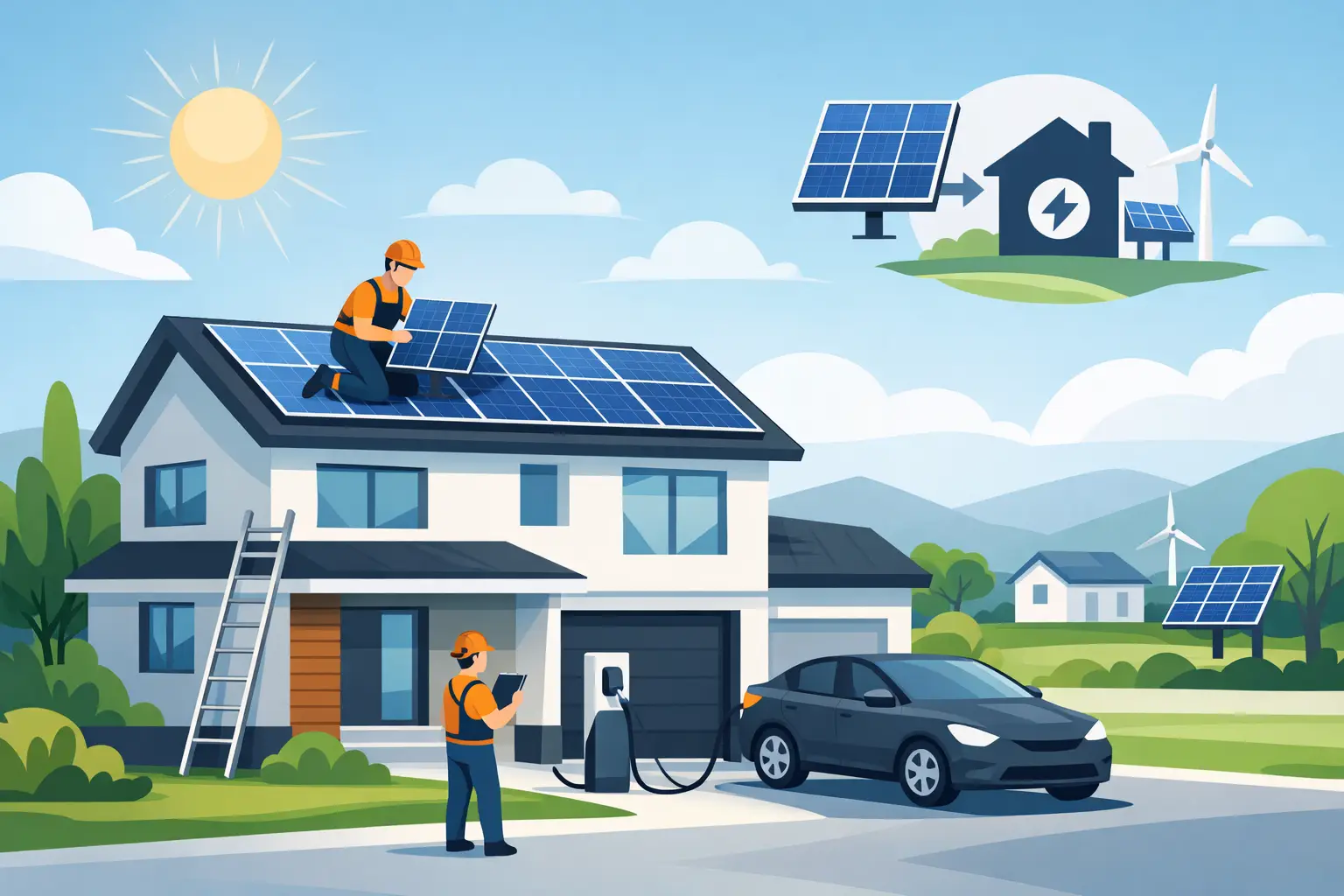
Once permits are approved, the crew installs the racking, mounts the panels, connects the inverter, and ties the system into the home’s electrical infrastructure. After installation, the project typically goes through final inspection and utility review before the system is fully turned on.
A strong installer does more than complete the build. They manage the process end to end, keep the homeowner informed, and make sure the system is set up to perform reliably for years.
Why Homeowners Choose Solar
The biggest driver is usually cost savings. In high-rate markets, utility bills can rise fast, and solar gives homeowners a way to offset a meaningful share of that expense. Instead of buying all of your electricity from the grid at retail rates, you produce part of it yourself.
The second major reason is energy independence. Solar alone can reduce reliance on the utility, but when you add battery storage, you gain more control during peak-rate periods and power outages. That matters even more in places where blackouts, wildfire shutoffs, storms, or grid instability are real concerns.
There is also the home upgrade factor. Residential solar installation can be part of a larger modernization plan that includes battery backup, home electrification, EV charging, and panel upgrades. For homeowners who expect to stay in their property long term, that can be a practical investment rather than just a utility decision.
What Residential Solar Installation Does Not Automatically Do
This is where expectations need to be realistic. Solar does not always eliminate your electric bill entirely. That depends on your system size, roof space, utility structure, usage patterns, and whether you consume more power than your system produces.
It also does not automatically keep your home powered during an outage. A standard grid-tied solar system usually shuts off when the grid goes down for safety reasons. If outage protection is a priority, you typically need battery storage and the right backup configuration.
And not every home is a perfect candidate. Heavy roof shading, limited usable roof area, an aging roof, or very low electricity usage can change the economics. Good installers will explain that honestly instead of forcing every home into the same proposal.
Costs, Savings, and the It-Depends Factor
One reason homeowners search what is residential solar installation is that they are trying to understand whether it is financially smart. The answer depends on several moving parts: your electricity rate, available sunlight, equipment choice, financing structure, local incentives, and how long you plan to stay in the home.
Some homeowners prioritize the lowest upfront cost. Others want premium panels, battery storage, or a system sized for future electric vehicles. Both can be valid choices, but they produce different financial outcomes.
Financing matters too. Paying cash usually delivers the strongest long-term return. Financing can lower the barrier to entry and help homeowners start with little or no money down, but monthly payments and loan terms affect total savings. The best approach is not always the cheapest system. It is the system that fits your home, usage, and budget without cutting corners on quality.
That is why working with an experienced provider matters. Companies with deep installation experience, in-house coordination, and access to premium products are often better positioned to build a system that performs well over time, not just one that looks attractive on day one.
Roof, Battery, and Electrical Upgrades
A lot of homeowners picture solar installation as a roof-only job. In reality, the best projects look at the whole home energy system. If your roof is near the end of its life, it may make sense to address roofing before the panels go on. If your electrical panel is outdated, an upgrade may be necessary for code compliance or future expansion.
Battery storage is another major consideration. If your goal is simply reducing daytime energy costs, solar alone may be enough. If you want backup power, time-of-use optimization, or more control over your energy use, batteries become much more valuable.
This is where full-service providers stand out. Instead of pushing homeowners to coordinate multiple contractors, they can handle solar, roofing, storage, panel upgrades, and related work under one project plan. For many homeowners, that is not just more convenient. It reduces delays, confusion, and finger-pointing between trades.
Is Residential Solar Installation Worth It?
For many homeowners, yes – especially in markets with strong sun, high utility rates, and favorable incentives. But the right question is not whether solar is good in general. It is whether a well-designed system makes sense for your specific home.
A worthwhile project should lower long-term energy costs, fit the condition of your roof and electrical system, and align with how you actually use power. It should also come from a company that can design, install, and support the system after the sale. That level of execution matters just as much as the panels themselves.
If you are comparing options, focus on the full picture: production estimates, equipment quality, financing terms, installer track record, warranty support, and whether the company can handle related upgrades if your home needs them. That is the difference between buying a solar quote and investing in a working energy solution.
Residential solar installation is ultimately about control. Control over rising energy costs, control over how your home is powered, and in many cases, more control when the grid lets you down. If that sounds like the direction you want for your home, the smartest next step is to get a professional assessment built around your roof, your usage, and your goals – not someone else’s.