If two solar quotes look similar on the surface, Los Angeles homeowners can still end up with very different results. One system saves consistently for 25 years. Another runs into roof issues, underperforms in summer heat, or leaves the owner chasing support after installation. That is why picking the right los angeles solar installer matters as much as choosing the panels themselves.
In a market as active as Southern California, the challenge is not finding a company that can put panels on a roof. The challenge is finding a team that can design the right system, price it competitively, coordinate the project properly, and still be there when you need service later. Solar is not just a product purchase. It is a long-term home energy upgrade that affects utility costs, backup power, roof planning, and property value.
What a Los Angeles solar installer should actually handle
A strong installer does more than sell equipment. The real job starts with evaluating your roof, electrical setup, energy usage, and future goals. Some households want the fastest return on investment. Others care more about blackout protection, EV charging, or making room for a future battery.
That is where experience shows. A qualified los angeles solar installer should be able to explain system sizing in plain English, identify whether your main panel needs an upgrade, and flag any roofing concerns before construction starts. If a contractor skips those conversations and jumps straight to monthly payment numbers, that is usually a sign the process is being treated like a quick sale instead of a properly planned project.
For commercial properties, the same principle applies at a larger scale. Load profiles, demand charges, shade conditions, and available roof area all affect whether a project delivers meaningful savings. A capable installer should be ready to discuss those variables clearly, not bury them in generic projections.
Price matters, but cheap solar can get expensive
Most buyers start with cost, and that makes sense. Utility rates in California are high, and solar is often evaluated through one main question: how much will it save me? The problem is that the lowest quote is not always the best value.
A lower price can come from older equipment, weaker warranties, rushed design work, or subcontracted installation with limited accountability. It can also come from undersizing the system to make the proposal look more affordable. That may reduce the upfront number, but it can leave you buying more grid power than expected for years.
The better approach is to compare total value. Look at panel brand, inverter type, production estimates, workmanship coverage, financing terms, and post-install service. Ask whether battery storage is priced as an add-on now or can be integrated later without major rework. Ask who handles permits, inspections, utility interconnection, and warranty claims.
A serious solar partner should be comfortable having that conversation. Confidence usually comes from operational depth, not sales pressure.
The roof, the electrical panel, and the battery question
In Los Angeles, solar decisions often connect to other parts of the home. That is one reason one-stop execution matters. If your roof is near the end of its life, installing solar first can create extra cost later when panels have to be removed and reinstalled. If your electrical panel is outdated, the project may need a service upgrade or a smart panel solution to support solar, storage, and EV charging.
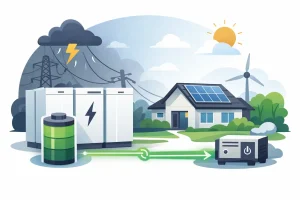
Battery storage deserves special attention. Some homeowners want backup power right away because outages have become more disruptive. Others want to start with solar only and add a battery later. Both paths can work, but the system should be planned accordingly from day one.
A good installer will not push a battery into every project just because it raises the contract value. In some homes, the numbers work well immediately. In others, solar alone may be the stronger first step, especially if budget is the main concern. The right answer depends on usage patterns, outage concerns, financing, and how much independence from the grid you want.
Why local experience changes the outcome
Los Angeles is not a one-size-fits-all solar market. Roof types vary widely. So do neighborhood permitting realities, utility billing structures, and architectural constraints. Homes in the Valley, the Westside, Pasadena, or coastal areas can present different design and installation considerations.
That is why local experience still matters, even when equipment brands are nationally known. A los angeles solar installer with deep project volume in the region is more likely to anticipate city requirements, navigate permit workflows efficiently, and design around heat, shading, and roof geometry without unnecessary delays.
Local knowledge also matters after the install. If you need service, panel removal for roof work, system diagnostics, or help adding storage later, proximity and operating scale make a real difference. Solar is easier to buy when everything sounds simple. It becomes more important to have a dependable company when something needs attention five years from now.
Residential and commercial buyers should ask different questions
Homeowners and business owners both want lower electric bills, but the buying process is not identical.
For homeowners, the focus is usually long-term monthly savings, resilience during outages, tax credits, and whether the project can be completed without turning into a construction headache. Clear communication matters here. So does financing flexibility. Many buyers want to know whether they can start with little or no money down while still seeing a practical payback.
Commercial buyers tend to evaluate solar more like an operating decision. They care about return on investment, consumption offsets, installation timelines, and avoiding disruption to tenants, staff, or operations. They may also need shade structures, carport systems, or battery storage that supports broader energy management goals.
An installer serving both markets well should understand those differences. The proposal, engineering, and execution strategy should match the property type instead of forcing every customer into the same sales script.
What separates a dependable installer from a lead generator
This is one of the biggest distinctions buyers miss. Some companies are true full-service installers. Others are primarily sales organizations that pass the project to different contractors after the paperwork is signed.
That handoff can create confusion around accountability. If there is a design issue, an installation delay, or a service call later, you may be dealing with multiple parties instead of one responsible provider.
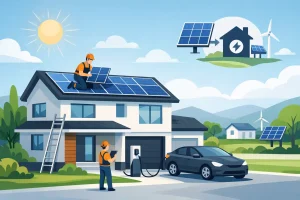
A full-service company typically gives buyers a cleaner path. Design, sales, permitting, installation, service, and related upgrades stay under one umbrella. That matters even more if your project includes roofing, battery storage, EV charging, or electrical panel work. Bundling those services with a single experienced team often reduces friction, shortens timelines, and lowers the chance of finger-pointing between vendors.
This integrated model is one reason many buyers prefer established companies with years in the market and a large base of completed projects. Scale alone is not everything, but it often signals stronger systems, broader service capacity, and more dependable long-term support.
Questions worth asking before you sign
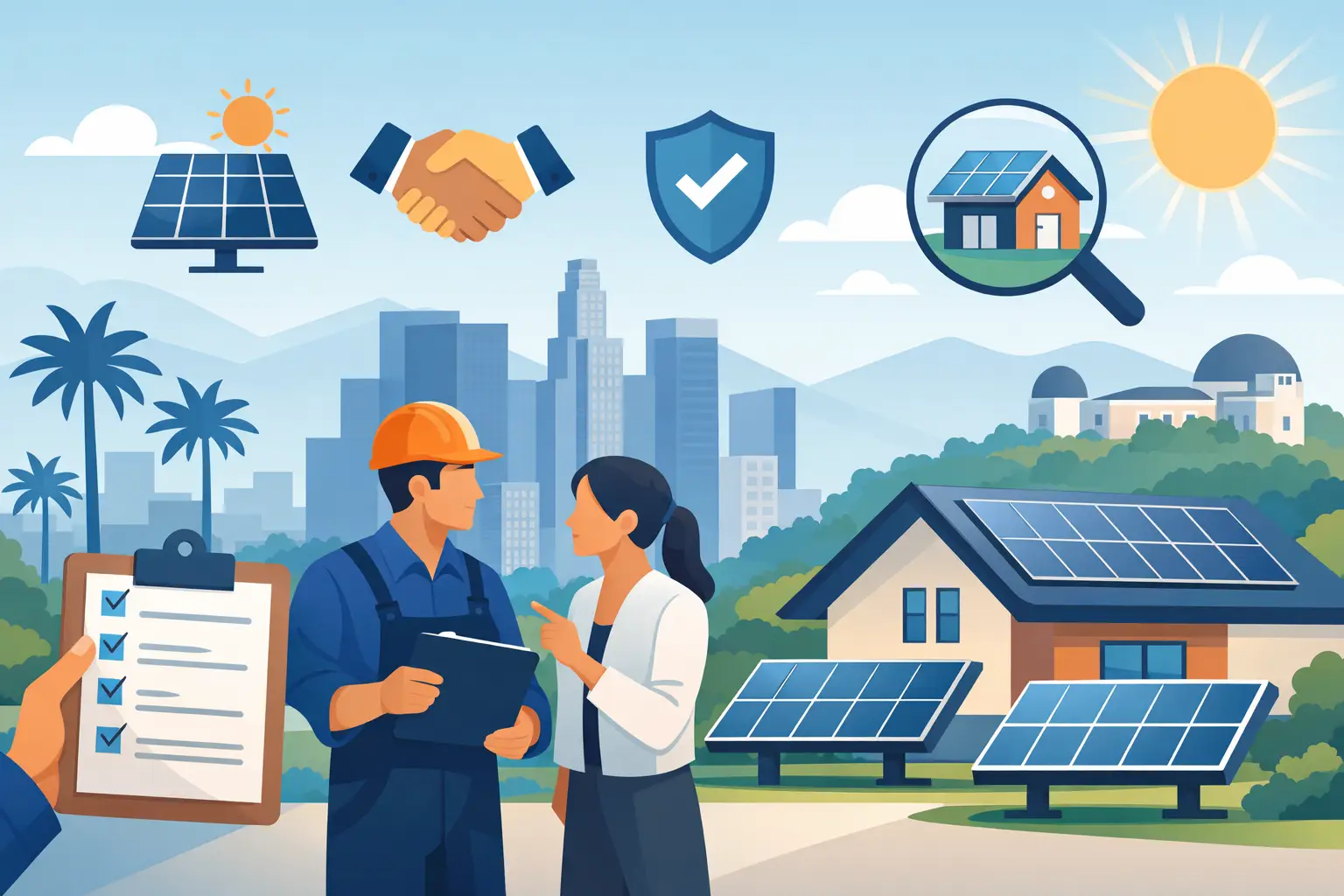
A proposal should leave you with clarity, not confusion. Ask who will install the system, what equipment is being used, what production assumptions are built into the estimate, and what happens if the roof or panel needs additional work. Ask how warranties are handled and whether service support is in-house.
You should also ask how the system fits your future plans. If you expect to buy an EV, add air conditioning, electrify appliances, or install a battery later, say so now. The best design is not just about current usage. It is about where the property is heading over the next several years.
If an installer can answer those questions directly and show a record of handling the full scope of work, that is usually a strong sign. If the conversation keeps circling back to a promotional rate without addressing project details, keep looking.
LA Solar Group has built its reputation around this full-service approach – combining solar, batteries, EV charging, roofing coordination, panel upgrades, financing, and long-term service under one experienced team. For buyers who want premium products, competitive pricing, and fewer moving parts, that kind of execution can make the switch to solar feel much more straightforward.
The best choice is the one that still looks good years later
The right installer is not just the company that wins the sale. It is the one whose work still makes sense after summer utility spikes, after the first outage, and after your home energy needs change. When you evaluate a los angeles solar installer through that lens, the decision gets clearer. Look for quality, transparency, and staying power – then choose the team that makes your energy upgrade feel like a smart investment, not a gamble.