Most homeowners start with the same question: how does residential solar work once the panels are actually on your roof? The short answer is simple. Solar panels turn sunlight into electricity, your home uses that electricity first, and any extra power can go to the grid or into a battery. The real value is in the details, because system design, utility rules, roof condition, and your usage pattern all affect how much you save.
How does residential solar work step by step?
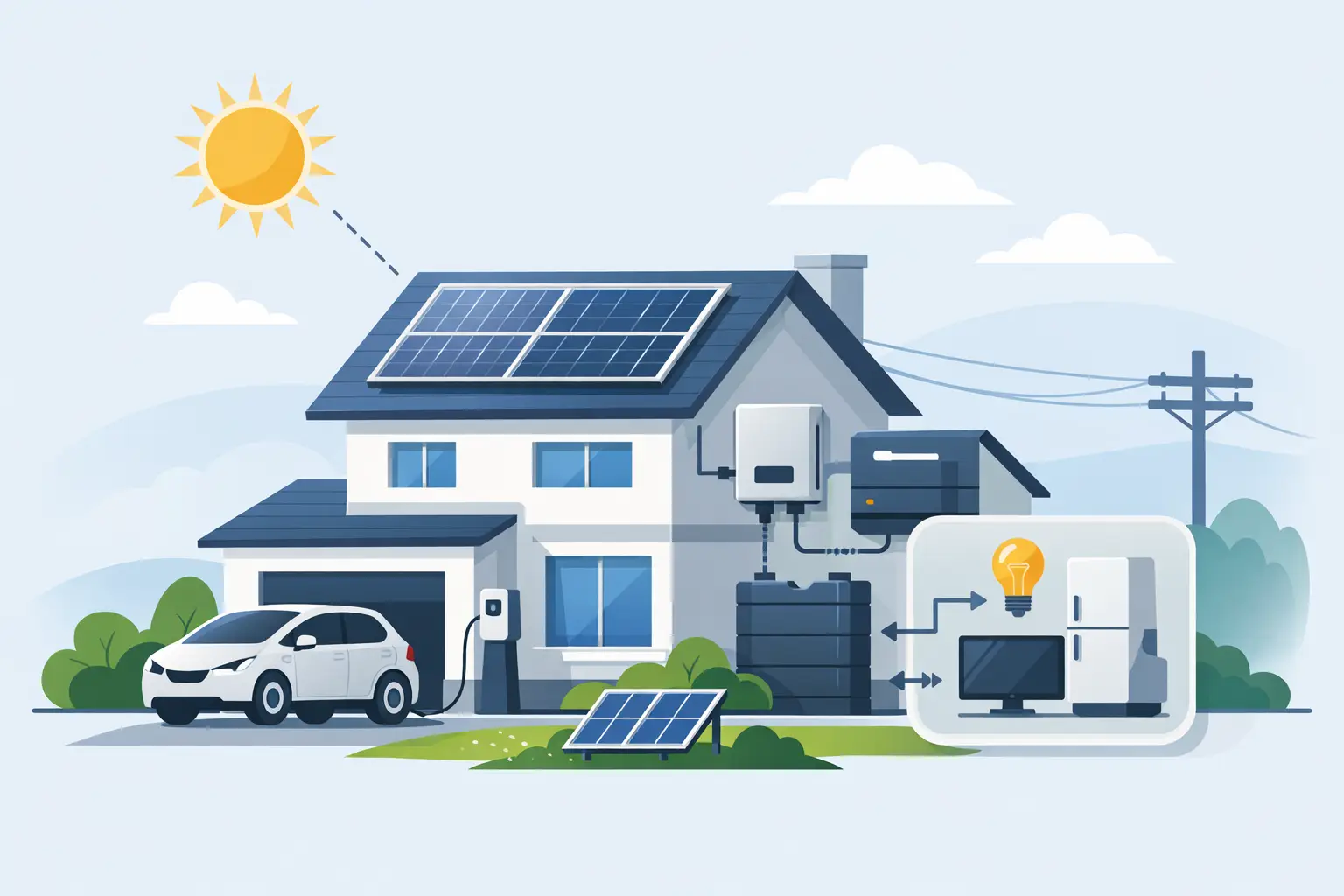
A residential solar system is built to generate electricity where you use it. The panels on your roof contain photovoltaic cells. When sunlight hits those cells, they produce direct current, or DC electricity. Your home, however, runs on alternating current, or AC electricity, so that power has to be converted before it can feed your lights, appliances, and HVAC system.
That conversion happens through an inverter. In many systems, the inverter is the component doing the heavy lifting behind the scenes. Once the electricity is converted into usable AC power, it flows into your home’s electrical panel and serves your current energy demand. If your dishwasher, air conditioner, and refrigerator are running, solar energy can help power them in real time.
If your system is producing more electricity than your home needs at that moment, the extra energy usually goes somewhere else. In a grid-tied setup, it may be sent back to the utility grid, depending on local interconnection rules and utility policy. If the home has battery storage, some or all of that excess can charge the battery for later use.
At night, or during low-production periods, your home pulls power from the grid unless you have enough stored battery energy to cover the gap. That is why solar is not just about the panels. It is about how generation, storage, and utility service work together.
The main parts of a home solar system
Panels get most of the attention, but they are only one part of the system. The panels capture sunlight. The inverter converts electricity into a form your home can use. The mounting system secures the panels to the roof and is designed around roof type, pitch, and weather exposure.
Your electrical panel matters too. In some homes, an older panel can limit how much solar can be added or whether battery backup can be integrated efficiently. That is where a main panel upgrade becomes part of the solar conversation, especially for homeowners adding EV charging, electrified appliances, or backup loads.
The meter is another key piece. In many homes, a bi-directional utility meter measures both the electricity you pull from the grid and the electricity your system exports. If battery storage is included, the system also needs battery hardware, controls, and often a backup interface that determines which circuits stay powered during an outage.
This is one reason turnkey execution matters. Residential solar is not just a product purchase. It is a home energy upgrade that has to be designed around your roof, your service panel, your utility, and your goals.
What happens during the day, at night, and during outages
During sunny daytime hours, your system will usually produce the most electricity. If you are home and using power while the sun is out, you can consume solar energy directly as it is being generated. That is often the most valuable use of solar because it reduces the electricity you would otherwise buy from the utility at retail rates.
In the evening, production drops and then stops. At that point, your home needs power from the grid or from battery storage. This is where many homeowners get tripped up. Solar panels alone do not automatically keep your home running during a blackout. Standard grid-tied systems are designed to shut down during outages for safety reasons, so they do not send electricity onto utility lines while crews are working.
If backup power is a priority, batteries are the missing piece. A properly configured battery system can keep essential loads running during an outage, and in some cases can support much more depending on system size and home consumption. It depends on what you want backed up, how long the outage lasts, and how much energy your home uses.
Why your utility bill does not disappear completely
Many homeowners expect solar to erase the electric bill entirely. Sometimes it can get close, but not always. Your savings depend on system size, shading, orientation, local utility rates, seasonal weather, and how much electricity you use.
If your system is sized to offset most of your annual consumption, your bill can drop sharply. But utilities may still charge fixed connection fees, minimum charges, or non-bypassable charges. If your household uses more electricity than expected, especially after adding an EV, pool equipment, or electric heating, the bill may be higher than originally projected.
That does not mean the system is underperforming. It often means your energy profile changed. A well-designed system starts with accurate usage data and a realistic look at future needs, not just your current bill.
Net metering, billing credits, and why policy matters
One of the biggest factors in solar economics is how your utility handles exported electricity. In some areas, net metering allows homeowners to receive billing credits for excess solar power sent to the grid. In others, export compensation may be lower than the retail price of electricity.
That difference matters. If exported electricity is credited generously, a grid-tied system without a battery may still deliver strong savings. If export rates are low, battery storage can become more attractive because storing excess power for evening use may create more value than sending it to the grid.
This is why there is no one-size-fits-all answer to system design. The right setup in California may not be the right setup in Texas or Nevada. Utility structure, time-of-use rates, and local incentives all shape the financial picture.
How system size is determined
A residential solar system should be sized around your actual goals, not a generic estimate. Some homeowners want the lowest possible monthly payment. Others want maximum long-term savings. Others care most about outage protection or preparing the home for electrification.
Design starts with your past electricity usage, but it should not stop there. If you are planning to install an EV charger, replace a gas furnace with a heat pump, or add battery storage later, that should be accounted for early. Roof condition also matters. If a roof is near the end of its life, it is usually smarter to address that before installation rather than pay to remove and reinstall panels later.
A quality design also looks at solar access. South-facing roof planes often produce the most, but east- and west-facing roofs can still perform well depending on rate structure and daily usage patterns. Shade from trees, chimneys, and neighboring structures can reduce output, so layout matters.
Is residential solar worth it?
For many US homeowners, yes – but the answer depends on timing and expectations. Solar tends to make the most sense when utility rates are high, the home gets strong sun exposure, and the owner plans to stay long enough to benefit from cumulative savings. Tax credits and financing can improve the numbers, but they do not fix a poor system design.
The strongest solar projects are built around a full-home view. That means looking at the roof, panel capacity, usage habits, storage needs, and future upgrades together. A cheaper quote is not always the better deal if it ignores electrical work, uses lower-tier equipment, or leaves you with limited support after installation.
That is why experienced homeowners often look for a provider that can handle more than just panel placement. If roofing, battery storage, EV charging, or main panel upgrades are likely part of the plan, keeping the project under one roof usually reduces friction and improves long-term performance.
How does residential solar work for long-term savings?
The long-term benefit comes from producing electricity at your home instead of buying all of it from the utility year after year. Once the system is installed, your cost of power becomes more predictable. That can be a major advantage in markets where utility rates keep climbing.
Savings are rarely identical from one home to the next. A household that uses a lot of daytime electricity may see value sooner than a household that uses most of its power after sunset without battery storage. A home with a clean, sun-friendly roof may outperform one with complex roof geometry and partial shade. Good solar planning accounts for those realities instead of glossing over them.
For homeowners who want lower bills, cleaner energy, and more control over their power, residential solar can be a strong investment when it is designed correctly the first time. The best place to start is not with a panel brand or a sales pitch. It is with a clear look at your home, your usage, and what you want your energy system to do for the next 10 to 25 years.