
Solar Panels and Power Outages
Panels for Solar Panels as well as Power Outages
Alternative power sources like solar panels can keep you powered up even if the grid goes out of commission in the event of a natural disaster. Solar panels can’t be enough. There will be batteries that can be used as backups to keep your powered up during an interruption. Let’s learn everything you need regarding solar panel systems in case the power is cut off.
Do solar panels work when there is a power outage?
You have shiny solar panels on the roof. Now you can generate a lot of your electric power. It’s almost time to stop paying the cost of electricity and can are feeling like an environmentalist. A stormy night storm causes the destruction of a massive tree on your block, and then the power goes out. Will your refrigerator still be working when the sun rises above the horizon? Most likely not.
It is likely that you are connected to the local grid-connected solar system if you have solar panels at the top of your home. This means that you are getting energy from the utility provider in the morning and at times in the event that your solar panel don’t produce enough power. When your panels generate more energy than you need and you want to send it to them.
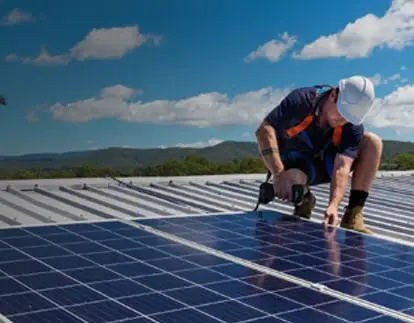
The majority of solar panels in homes are designed to be turned off when power goes out. This stops them from feeding electricity back to any wires that could have caused the power outage. You don’t want your panels to injure utility workers by the live voltage that is impacted by downed power lines.
What good are solar panels for a roof? If they don’t generate electricity? There must be ways to keep electricity running. Are there batteries? or preventing solar energy from flowing into the grid if the grid is down.
Why are solar panels not working during blackouts?
Most homeowners who have solar panels in their homes can be “grid-tied,” which is when the panels are connected with an inverter.
The inverter connects to the main AC panel of the house along with a electronic meter. This allows you to keep track of both the energy you receive from the utility company as well as the solar energy you send into the grid. Grid-connected solar systems do not require any backup batteries.
This is why solar experts from home often claim”the grid” is the battery of their system. Solar panels can generate excess energy and you get credit from your neighbors. However, when the sun goes down you still require grid power from your utility company. It is possible to pay for electricity at as little as $0.01 if you do this balance act right.
A typical grid-tied device will have an automatic shut-off to stop any extra energy from flowing through damaged power lines in the event of a blackout. This safety feature protects line workers fixing their equipment when it breaks.
However, this does not mean your home will not be able to benefit from solar power. If your home is under an electrical blackout, the solar system will be shut off.
How can you use solar energy to withstand an outage in power?
There are a variety of ways you can keep your home functioning even when the power is cut off.
- Make sure to use an additional gas generator
- Solar batteries can be added to your system
- Solar-powered generators are a good option
- The inverter you have is able to be replaced by the Enphase Ensemble or Sunny Boy system
1. Backup gas generator
While we solar-lovers don’t tend to burn items to generate electricity, the best method of ensuring you have backup power in the event of a power outage is to buy a generator.
It is possible to purchase a gasoline generator that has a power capacity of 9,000 watts for $1,400 plus fuel and installation costs. This can allow you to power your entire house while the utility crews restore the grid.
It is possible to survive an extended outage by having an electric generator and fuel. If you need to, you may be able to assist your neighbour. Even though your solar panels won’t be able to start again until the grid is restored, at the very least you’ll be able to energy.
The cons of having an emergency generator
Generators that run on gas can be loud and obnoxious. They also pollute the environment. Imagine the sound and smell that would be created if your generators were operated simultaneously by the neighbors of your ten most close.
You also run the risk of your fire starting due to stored fuel. This could happen in the event that you fill the hot metal parts of the generator. It is not good if your power goes out because of the increased risk of fire.
Although it is true that there exist cleaner power generators that run using diesel or natural gas however the price of any more is very expensive. The power outage shows that natural gas is very unstable, even in winter blackouts.
Generators aren’t the most ideal choice aside from the affordable cost. Let’s take a look at some solar options, including those referred to as solar generators in the following section.
2. Solar battery
A solar battery system is the best solution to have peace of mind in times of power failures.
Nothing can beat the feeling of having the sole home on the block with the lights on, even after the grid goes out. However, the generous among us would rather have all our neighbors enjoy the same benefits. The switch of power from the grid to backup battery can be seamless and reassuring by using a solar battery.
There are a variety of options to choose from. From a bank deep cycle lead-acid battery to the sleek and simple Tesla Powerwall, there are numerous options. Solar installers are skilled in setting up solar panels along with batteries, and you could be surprised by the variety of Powerwall alternatives that are available.
There are many accredited installers who are able to install Tesla if you have your desires. There are many options available to you if you’re open-minded and willing to explore the possibilities. There are batteries available from companies such as [xfield_company] that are comparable in both price and function to Tesla’s.
Solar without batteries (i.e. A solar-plus battery installation different from solar without batteries (i.e. The tiny solar island will charge and discharge the batteries all day long even though the blackout is still in place. You can continue running this way even if there’s a power outage.
3. Solar generator
For around a thousand dollars, you can purchase a “solar generator” from the [xfield_company] which can at a minimum make sure your meal is warm, and keep the space heater on.
Remember that these portable options are able to be charged by solar panel when the grid is in use. However, without the same equipment required for a full-solar-plus-storage system, they will not charge from solar when it is down.
4. A system of inverters or inverters that is distinctive
It is possible homeowners with solar panels to make use of the energy they generate without having connecting to the grid or to install energy storage. [xfield_company] which makes solar inverters. The inverters are programmed to automatically cut off from power grids in case of power outage, while still supplying power from solar energy.
The majority of solar inverters have the automatic shut-off feature we have mentioned previously. However, some inverters allow homeowners to switch to solar systems when there’s no electricity.
Another inverter is limited to generating 2,000 watts per minute in “opportunity energy” and is able to stopped if it uses excessive power. It is only operational only when it is sunny.
It might seem like a lot but this is only 20 light bulbs with a power of 100 watts. This isn’t enough to power an air conditioner. Only essential appliances are eligible to use opportunity power. You can plug in your lamp and refrigerator, as well as your television and smartphone, to keep yourself company.
The total cost of the inverter and its outlet could be $1000 more than an inverter equipped with the backup option. This might be an appealing option if you consider the 10-year lifespan of the inverter.
[xfield_company] is a business that has worked to ensure that solar power is available even when the grid goes down. The energy management system and micro inverters work to create “grid-agnostic” solar power. It can transmit power from the solar panels to your appliances so long as there is enough sunlight, even without batteries.
[xfield_company] would prefer you purchase its energy storage system in conjunction with the [xfield_company] system. This will enable your home to operate 24 hours a day from stored solar energy. You might also be willing to spend several thousand more on microinverters for the [xfield_company] company or the [xfield_company system.
Why not get off-grid?
Individuals who want to completely eliminate fossil fuels, and make sure that only renewable power is flowing through their pipes could decide to go off-grid. It is an option however it is expensive.
While going solar is more cost-effective than ever however, it is a significant financial commitment. The choice of an off-grid system can be extremely costly. A small, off-grid system that includes battery storage can cost thousands more than one that is connected with the grid. This is due to the expensive hardware needed.
Off-grid batteries should be able to provide sufficient electricity for you during three days of cloudy and snowy weather during winter. Although it may seem like a lot in summer, you wouldn’t wish to have your house without electricity and the option of a fossil-fuel generator. This puts you back to starting from scratch.
