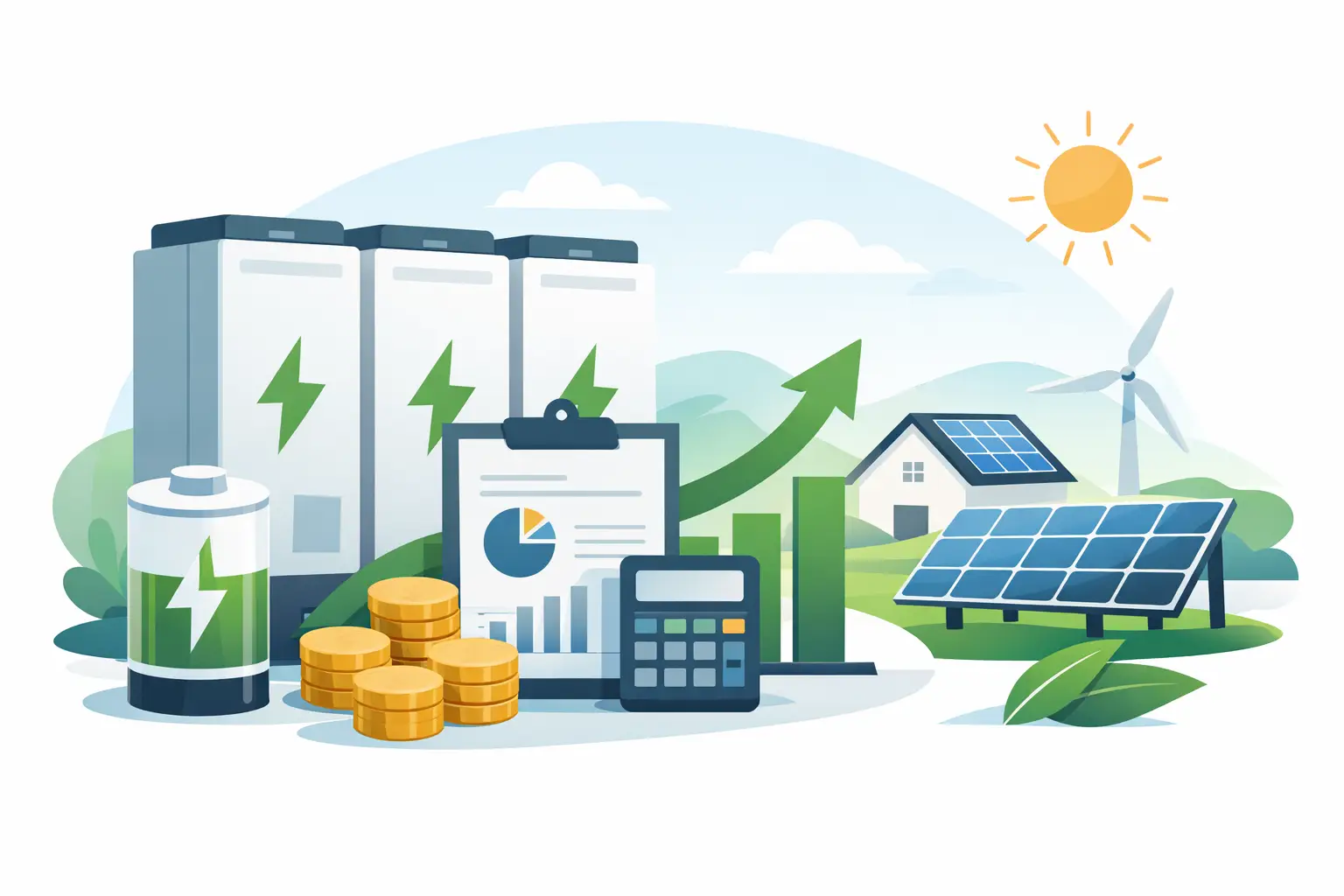
A battery can change the math of an energy project fast. For many homeowners and business owners, the battery storage tax credit is what turns backup power and smarter energy use from a nice upgrade into a financially sound decision.
That shift matters because storage is no longer just about keeping a few lights on during an outage. Batteries can help reduce peak utility costs, support solar self-consumption, and give you more control over when and how you use electricity. If you are considering solar, adding storage, or upgrading an existing system, understanding the tax credit is one of the first financial questions to answer.
What the battery storage tax credit actually is
The battery storage tax credit is a federal tax incentive that can help offset the cost of installing an eligible battery energy storage system. Under current federal rules, standalone battery storage may qualify, which is a major change from earlier years when storage often needed to be charged only by solar to receive the credit.
For most property owners, this credit is tied to the federal Investment Tax Credit framework, now often discussed under the broader clean energy credit rules. In practical terms, if your battery system qualifies, a percentage of the total eligible installed cost can be claimed as a credit against your federal tax liability.
That distinction matters. A tax credit is not the same as a deduction. A deduction lowers taxable income. A credit lowers the taxes you owe, dollar for dollar, subject to the rules that apply to your situation.
Why this credit matters more now
Storage used to be viewed as an expensive add-on. Today, utility rate volatility, time-of-use billing, wildfire shutoffs, storm-related outages, and growing electrification demand have changed that equation.
If you live in a market with high evening electricity rates, a battery may help reduce your reliance on costly grid power during peak hours. If you run a business where downtime is expensive, stored energy can improve resilience. If you already have solar, storage can help capture more of the power you generate instead of sending it back to the grid at lower compensation rates.
The tax credit improves the payback picture. It does not make every project a perfect fit, but it can materially reduce upfront cost and shorten the path to savings.
Who may qualify for the battery storage tax credit
Eligibility depends on several factors, including system type, installation date, property type, and how the battery is used. In general, residential customers may qualify when the battery is installed at a home in the United States that meets the applicable rules. Commercial property owners may also qualify, though the tax treatment can become more technical.
One of the most important developments is that standalone battery systems can now qualify if they meet the required capacity threshold and other federal conditions. That gives property owners more flexibility. You may be able to install storage with solar, or add storage later to support an existing energy strategy.
There are still details to verify before assuming eligibility. For example, tax treatment can differ for a primary home versus another qualifying residence, and commercial projects may involve depreciation and additional incentive layers. This is where a properly designed project and good documentation matter.
Residential vs. commercial battery projects
For homeowners, the focus is usually straightforward: Is the battery eligible, what installation costs count, and do you have enough federal tax liability to use the credit?
For commercial projects, the answer can be more favorable but also more complex. Businesses may be able to combine the federal credit with depreciation benefits and, in some cases, local or utility incentives. On the other hand, the project structure, ownership model, and business tax position all affect the final result.
If you own a commercial property, it is smart to review the storage design and tax treatment early instead of treating incentives as an afterthought.
What costs are usually included
The battery itself is only part of the project cost. In many qualifying installations, eligible costs may include the battery equipment, associated electrical components, labor, permitting, and other necessary installation expenses.
That broader definition is significant because installation is not a minor line item. Integrating storage into a home or commercial electrical system often requires design work, load calculations, interconnection planning, mounting, wiring, commissioning, and in some cases panel upgrades. If those costs are part of a qualifying installation, they can have a real impact on the total credit amount.
Still, not every related improvement automatically qualifies. If your project includes roofing work, service panel changes, or other upgrades, some costs may be eligible and others may not be. The safest approach is to review the full proposal line by line with your installer and tax professional.
The battery storage tax credit and solar together
For many customers, solar and storage are strongest as a pair. Solar lowers the cost of producing electricity during the day. A battery helps you keep more of that value for later use.
That pairing can be especially attractive in areas with lower net metering value or steep time-of-use rates. Instead of exporting excess daytime production and buying expensive evening power from the grid, you can store energy and use it when rates are highest.
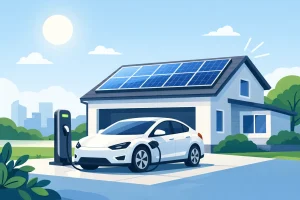
There is also a resilience benefit. Solar alone typically does not keep your property powered during an outage unless the system is designed with storage and the right backup configuration. If backup power is a priority, the battery is what turns a solar project into an energy security asset.
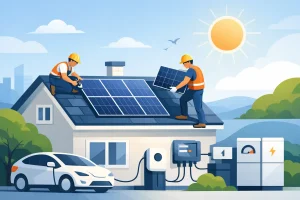
For customers planning a new system, combining solar and storage at the same time often creates the smoothest installation process. For others, adding a battery later can still make sense, especially if utility rate changes have made energy management more valuable than it was when the solar system was first installed.
A few trade-offs to understand before you count the savings
The tax credit is valuable, but it should not be the only reason to install storage. A good battery project should still make practical sense for your property.
If your main goal is whole-home backup for extended outages, you may need a larger battery system than someone who just wants to offset evening peak rates. If you are in a market with relatively low utility prices and limited outage risk, the financial return may be slower. And if your electrical system needs significant upgrades first, the project cost may rise.
Battery chemistry, warranty terms, usable capacity, backup loads, and software controls all affect value. So does the quality of installation. A low price can look attractive on paper, but it is not a bargain if the system is undersized, poorly configured, or unsupported after commissioning.
How to claim the credit without creating headaches later
The process is not just about buying equipment and hoping it works out at tax time. Documentation matters.
Keep your signed contract, detailed invoice, proof of payment, equipment specifications, permit records, and any commissioning paperwork. Make sure your proposal clearly separates major cost categories, especially if the project includes multiple services. Clean records can make tax filing easier and reduce confusion if questions come up later.
It is also smart to talk with a qualified tax professional before filing, particularly if you are self-employed, own rental or commercial property, or are combining multiple incentives. The credit can be highly beneficial, but the filing details depend on your tax situation.
What to ask before moving forward
Before approving a battery project, ask how the system will be used day to day. Will it prioritize backup, bill savings, solar self-consumption, or all three? Ask what portion of the home or building it will back up, how much usable energy it provides, and whether future expansion is possible.
You should also ask for a realistic savings outlook, not just a best-case scenario. Good installers will explain the assumptions behind utility rate offsets, battery cycling patterns, and backup performance. They should also be clear about warranty coverage, monitoring, and long-term service.
An experienced provider can help you design around the incentive instead of chasing it blindly. That is especially important when a project involves solar, storage, EV charging, panel upgrades, or roofing in the same scope. A company like LA Solar Group can coordinate those moving parts under one plan, which often reduces friction and helps customers avoid costly design mismatches.
The best time to think about storage is before the next outage, before rates go up again, and before another year passes without using available incentives. If the battery storage tax credit applies to your project, it can make a premium energy upgrade far more practical. The key is making sure the system is built around your property, your usage, and the way you actually want your power to work.