A refrigerator full of food, a working HVAC system, medical equipment, internet access, and a garage door may all become urgent the moment the grid goes down. The best backup power options are not simply the biggest systems you can buy. They are the systems sized around the loads you cannot afford to lose, the length of typical outages in your area, and the fuel or energy source you can depend on.
For many homeowners, backup power has moved from a nice-to-have upgrade to a practical part of home planning. Severe weather, wildfire-related shutoffs, aging grid infrastructure, and rising electricity rates have made energy resilience a real consideration. The right solution can protect your home during an outage while also reducing everyday utility costs.
What Backup Power Should Cover
Start by defining your essential loads. Most homes do not need to run every circuit during an outage. Prioritizing the right equipment can lower the cost of a backup system and extend how long it can operate.
Essential loads often include refrigeration, lighting, Wi-Fi, phones and computers, garage doors, security systems, a well pump, and select kitchen outlets. Depending on the household, that list may also include medical devices, a sump pump, central air conditioning, or electric heating. A whole-home solution can power nearly everything, but it requires more capacity and more careful electrical planning.
It also helps to separate power from energy. Power, measured in kilowatts, determines what appliances can run at one time. Energy, measured in kilowatt-hours, determines how long they can run. A battery may have enough power to start a large appliance but not enough stored energy to operate it all night alongside other loads. Proper load analysis matters more than choosing equipment based on a single advertised number.
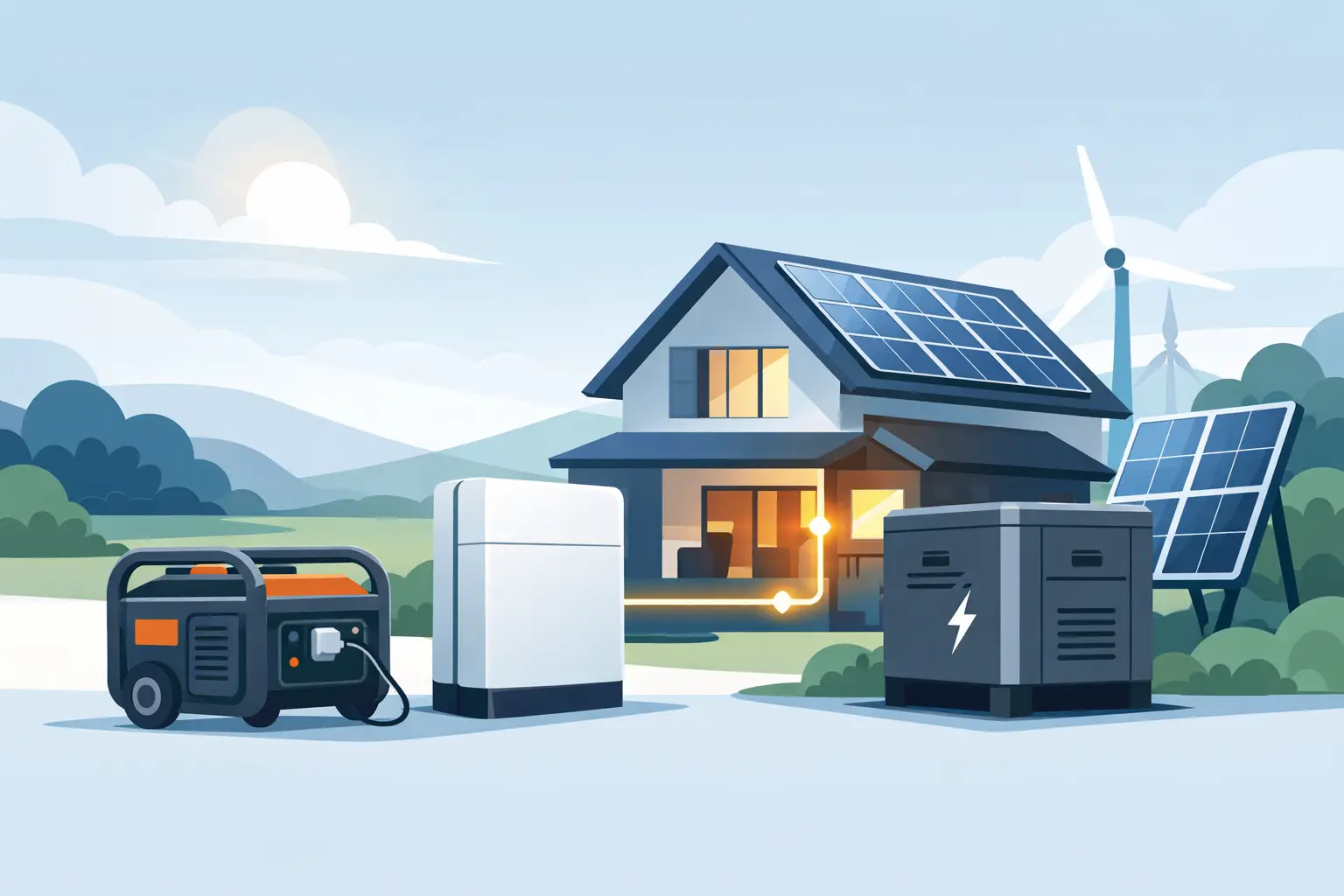
Best Backup Power Options Compared
Portable generators: low upfront cost, hands-on operation
A portable generator is often the fastest and least expensive path to outage protection. Gasoline, propane, and dual-fuel models can keep a few essential appliances running when connected safely through a professionally installed transfer switch or inlet.
The trade-off is convenience. Portable generators must be moved outside, fueled, started, and monitored. They produce noise and emissions, cannot operate indoors or near windows, and require fuel storage that may be difficult during an extended emergency. They are a reasonable choice for occasional short outages, especially when the goal is to protect a refrigerator, lights, and a few outlets rather than the full home.
Never connect a portable generator directly to a wall outlet. This dangerous practice can backfeed electricity onto utility lines and damage equipment. A transfer switch is the proper way to isolate the home from the grid during generator operation.
Standby generators: dependable whole-home coverage
A permanently installed standby generator automatically starts when utility power fails. Fueled by natural gas or propane, it can support selected circuits or the whole home, including high-demand equipment when sized correctly. For homeowners who need reliable coverage without manual setup, this remains a proven option.
Standby generators are especially practical where outages can last several days and a dependable fuel supply is available. They can also be a strong fit for properties with medical needs, well pumps, or large HVAC demands that would require an unusually large battery system.
However, a generator does not lower everyday electricity bills, and it still relies on fuel. Installation may involve permitting, gas-line work, a concrete pad, sound considerations, and ongoing maintenance. Natural gas service can also be interrupted in rare large-scale events. It is dependable backup, but it is not a complete energy-management strategy.
Solar batteries: quiet, automatic, and useful every day
Home battery storage provides instant, quiet backup without on-site fuel. When the grid fails, an appropriately designed battery system can automatically power selected circuits or, with sufficient capacity, much of the home. During normal operation, it can store solar energy for evening use, reduce reliance on expensive utility periods, and help homeowners gain more value from their solar production.
A battery-only system can charge from the grid before an outage, but its backup duration is finite. This can be a practical choice for short outages or homes that mainly need lights, refrigeration, communications, and critical outlets. It is less ideal for repeated multi-day outages unless usage is carefully managed.
Battery systems require thoughtful design. Central air conditioners, electric dryers, ovens, pool pumps, and EV charging can quickly drain stored energy. Smart load controls and an essential-loads panel can make a smaller battery more effective by preventing noncritical appliances from running during an outage.
Solar plus battery storage: the strongest long-term fit
For many homeowners, solar paired with battery storage is one of the best backup power options because it addresses both resilience and daily energy costs. Solar panels produce electricity during the day, while the battery stores available energy for nighttime use or outages. When the sun returns after an outage, the system can recharge and continue supporting the home.
This does not mean every solar-and-battery system can power every appliance indefinitely. Weather, roof production, household consumption, and battery capacity all affect performance. Still, a properly sized system gives homeowners a renewable source of replenishment that a battery alone cannot provide.
The biggest advantage is flexibility. A system can be designed around essential loads for cost-effective outage protection, or it can be expanded toward whole-home backup with multiple batteries, smart panels, and load management. It can also help reduce peak-rate exposure in areas with time-of-use electricity pricing.
Vehicle-to-home power: promising, but model-dependent
Some electric vehicles can supply power back to a home through bidirectional charging equipment. Because EV batteries are much larger than most home batteries, this approach has significant potential for outage protection.
The limitation is compatibility. Not every EV supports vehicle-to-home operation, and the required charger, transfer equipment, permitting, and utility rules vary by location. It may be an excellent addition for a compatible household, but it should not be assumed to be a plug-and-play backup solution. Homeowners should also consider whether using vehicle energy during an outage could affect transportation needs.
How to Choose the Right System
The right backup system begins with your outage profile. If interruptions are brief and infrequent, a portable generator or modest battery may be sufficient. If your neighborhood experiences regular shutoffs, storms, or multi-day outages, a solar-and-battery system or standby generator may justify the higher upfront investment.
Next, decide whether you want essential-loads backup or whole-home backup. Essential-loads designs focus on the circuits that protect comfort, food, safety, and communication. Whole-home designs can support more appliances, but capacity must account for simultaneous demand. A home with electric HVAC, a large pool pump, electric cooking, and EV charging needs a different plan than a home using gas appliances and modest daytime loads.
Your existing electrical equipment also matters. Older main panels may need an upgrade before a battery, generator, or solar system can be integrated safely. Smart electrical panels and load management equipment can often improve backup performance by automatically prioritizing critical circuits instead of oversizing the entire system.
Finally, consider the value beyond the outage. A standby generator is focused on emergency operation. Solar and storage can provide outage protection while helping offset grid purchases year-round. For homeowners evaluating a long-term property upgrade, that difference can be substantial.
A Better Backup Plan Starts With Design
Backup power is not one-size-fits-all equipment. It is a home energy plan built around your electrical use, roof potential, outage risks, and budget. A professionally designed system should include load calculations, equipment placement, code-compliant interconnection, permitting, and a clear explanation of what will operate during an outage.
LA Solar Group helps homeowners bring solar generation, battery storage, electrical upgrades, and long-term service into one coordinated project. The goal is simple: protect the power that matters most without paying for capacity your household will never use.
Before choosing a system, walk through your home and identify what you would need for the first hour, the first night, and the third day of an outage. That conversation usually reveals the backup solution that will serve you best long after the lights come back on.