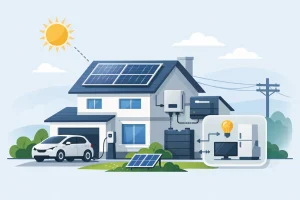
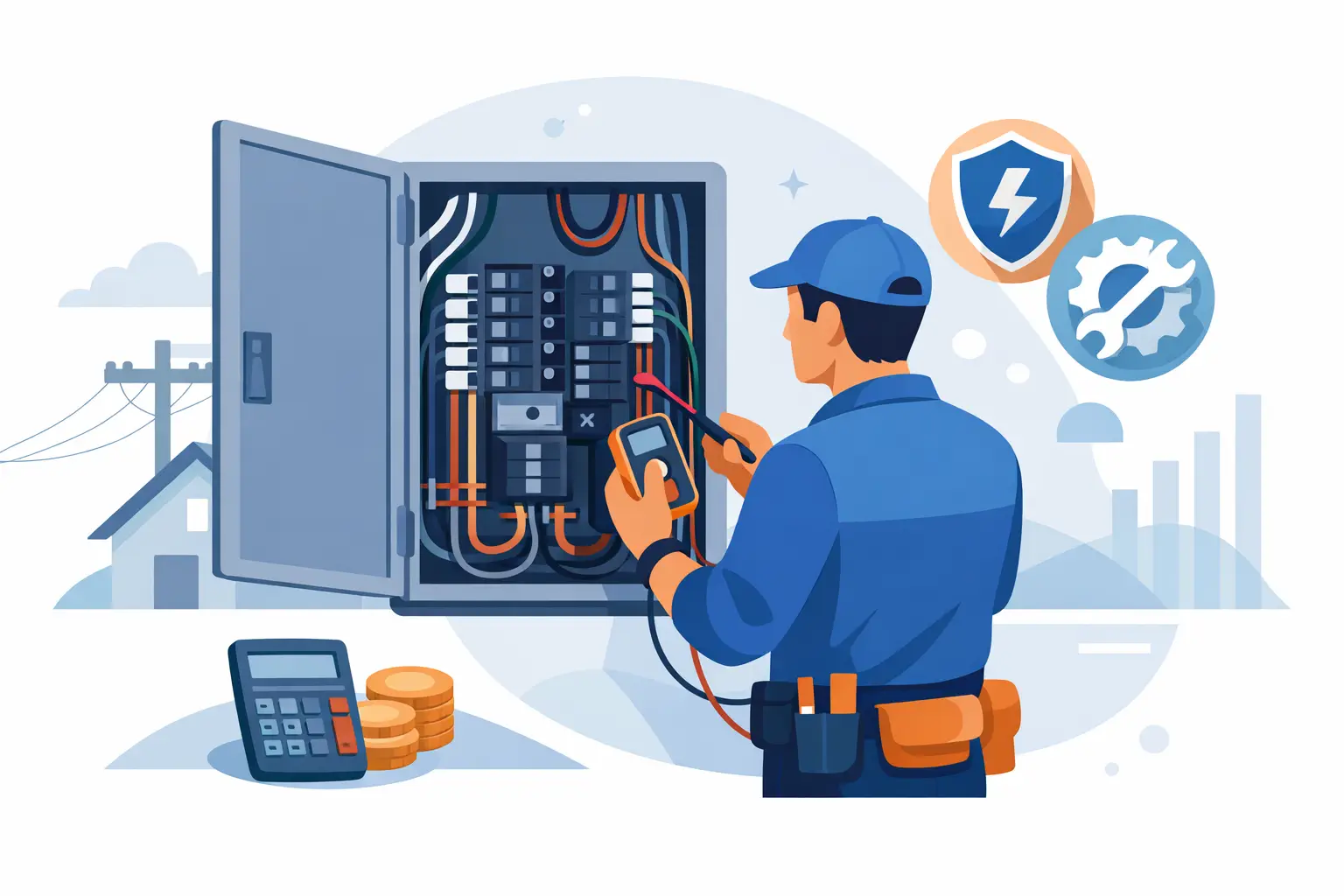
If your solar quote, EV charger plan, or battery backup project suddenly includes a service panel recommendation, the first question is usually the same: what is the main panel upgrade cost, and why is it necessary in the first place? That question matters because the panel is not a cosmetic upgrade. It is the control point for how much power your home can safely handle now and how well it can support bigger loads later.
For many homeowners, the answer is not a simple flat number. A main panel upgrade can be relatively straightforward in one house and much more involved in another. The age of the home, existing electrical service, utility requirements, panel location, local permit rules, and the scope of the larger project all affect price. If you are planning solar, battery storage, heat pumps, or an EV charger, understanding those variables helps you budget correctly and avoid surprises halfway through the job.
Average main panel upgrade cost
In most US markets, a main panel upgrade cost often falls somewhere between $2,000 and $6,000 for a standard residential project. In more complex cases, especially when utility work, meter upgrades, extensive rewiring, or code corrections are involved, the total can move higher.
That wide range is not contractor guesswork. It reflects real differences in labor time, material quality, service size, and site conditions. A simple swap from an outdated panel to a new 200-amp panel in an accessible location usually costs less than a project that also needs a new meter socket, grounding upgrades, stucco repair, utility coordination, and inspection corrections.
If you live in a high-cost labor market such as California, pricing can land toward the upper end. If the panel is being upgraded as part of a bundled electrification project, there may also be opportunities to reduce total cost through scheduling efficiency or financing.
Why homeowners end up needing a panel upgrade
A panel upgrade is usually driven by capacity, safety, or compatibility. Older homes were not designed for the number of electrical loads many households now expect. Central air, induction cooking, electric dryers, hot tubs, EV chargers, battery systems, and all-electric appliances add up quickly.
Sometimes the issue is not total usage, but available breaker space. You may have enough service capacity on paper, but no physical room left in the panel for new circuits. In other cases, the panel itself is outdated, damaged, or no longer considered reliable. That can become a problem during a solar or battery installation, because modern systems need a panel that meets current code and can support safe interconnection.
For customers moving toward full or partial home electrification, the panel is often the bottleneck. You can add premium energy equipment, but if the electrical backbone is undersized, the rest of the investment is limited.
What affects main panel upgrade cost
Amperage and service size
One of the biggest price factors is whether you are upgrading to 100 amps, 200 amps, or beyond. Many homes moving into solar-plus-storage or EV charging are upgraded to 200 amps because it gives more flexibility for future loads. Higher-capacity service often means more material, more utility coordination, and in some cases more extensive work at the meter.
Existing panel condition
A clean replacement is faster and more affordable than a project with corrosion, outdated breakers, unsafe wiring, or prior unpermitted modifications. If the electrician finds code issues that must be corrected before the new panel can pass inspection, those repairs will increase the total.
Utility and meter work
Some upgrades require disconnect and reconnect coordination with the utility. Others may require a new meter socket, service mast changes, or upgraded conductors. Once utility involvement expands, cost and scheduling usually follow.
Permits and inspections
Permit fees vary by city and county, and some jurisdictions are more demanding than others. That affects both direct cost and labor time. A proper panel upgrade should include permitting and inspection. Skipping those steps may seem cheaper up front, but it creates risk for insurance, resale, and safety.
Location and access
A panel mounted in an easy-to-reach exterior location is simpler than one tucked into a finished garage, enclosed room, or hard-to-access wall. If patching, painting, or exterior finish repair is needed after the electrical work, expect added cost.
Main panel upgrade cost for solar and battery projects
If you are adding solar, storage, or both, the main panel upgrade cost should be evaluated as part of the full energy plan, not as a stand-alone line item. That is because the panel directly affects system design, interconnection, and long-term usability.
For example, some homes can move forward with solar without a full panel replacement by using alternatives such as a load-side connection adjustment, a subpanel, or a smart panel strategy. In other homes, those workarounds are not the best option. A true upgrade may provide cleaner integration, better safety, and fewer limitations later if you decide to add an EV charger or battery backup.
This is where experience matters. A contractor that understands solar, storage, and home electrification can evaluate the panel upgrade in context. That often leads to a more cost-effective recommendation than treating each system as a separate project. For homeowners trying to lower utility bills while preparing for backup power and future electric loads, a coordinated design can save both time and money.
When a lower quote is not actually the better deal
Electrical pricing is not an area where the cheapest number always wins. A lower quote may exclude permit fees, utility coordination, finish repairs, grounding upgrades, surge protection, or code-required components. It may also assume ideal conditions that do not exist once the old panel is opened.
The better comparison is scope, not just price. Ask what amperage is included, whether the meter socket is part of the job, whether permits and inspections are covered, and whether the quote includes any corrections needed to pass code. If the panel upgrade is tied to solar or battery work, ask whether the proposed setup supports your future plans or simply gets the current job approved.
A strong installer should be able to explain the trade-offs clearly. Sometimes a slightly higher investment now prevents another costly electrical upgrade in two or three years.
How to tell if your home may need one
A few signs point toward a likely panel issue. If your home still has a 60-amp or 100-amp service and you are planning major electric upgrades, that is a common trigger. Frequent breaker trips, a full breaker panel with no open spaces, flickering under load, or an older panel brand with known reliability concerns also deserve attention.
You may also hear about the issue during a solar site assessment. That does not automatically mean the contractor is upselling. In many cases, the panel truly limits what can be installed safely. The right response is not to avoid the upgrade. It is to make sure the recommendation is backed by a clear load analysis and a code-based explanation.
Is a panel upgrade worth the cost?
If your only goal is replacing a functioning panel with no plans for added electrical demand, the answer depends on age, safety, and resale considerations. But if you are investing in solar, battery storage, an EV charger, or all-electric appliances, the value becomes easier to see.
A properly sized panel gives you room to grow. It can reduce installation obstacles, improve safety, support modern energy equipment, and help future-proof the home. It may not be the most visible upgrade, but it is often one of the most practical.
For homeowners who want a cleaner energy setup without piecing together multiple contractors, this is where an experienced provider adds real value. Companies like LA Solar Group look at the panel as part of the full system, which helps avoid fragmented design decisions and expensive rework later.
The smartest approach is to get a detailed assessment before locking in any major energy project. When you know what your home can support and what it needs to perform safely, the numbers become easier to trust and the upgrade becomes a strategic decision instead of a surprise expense.