A solar system can run quietly for years, which is exactly why small maintenance issues often get ignored until production drops. If you’re wondering how to maintain solar panels without turning it into a full-time project, the good news is that most systems need far less attention than people expect. The key is knowing what to watch, what to leave alone, and when to bring in a professional.
For homeowners and business owners, maintenance is really about protecting return on investment. Clean panels, solid wiring, healthy mounting hardware, and accurate monitoring all work together to keep energy production where it should be. A neglected system may still produce power, but even minor buildup, hidden damage, or inverter faults can chip away at savings month after month.
How to maintain solar panels without overdoing it
Solar panels are built for the outdoors. They handle heat, rain, wind, and seasonal changes well. That durability leads some owners to assume maintenance is unnecessary, while others go too far and clean or inspect the system too aggressively. Neither approach is ideal.
The right maintenance plan is simple. Keep panels reasonably clean, monitor system performance, inspect for visible issues from the ground, and schedule professional service if output changes unexpectedly or you see signs of wear. For most properties, that is enough to keep a system performing reliably.
Climate matters here. In dusty parts of California, Nevada, Texas, and similar markets, panels may need more frequent attention than systems in areas with regular rain. Commercial properties near traffic, construction, or industrial activity can also see faster buildup. On the other hand, many residential systems in milder environments only need occasional cleaning and routine checkups.
Start with performance monitoring
Before anyone grabs a hose or books a service call, check the numbers. The easiest way to catch a maintenance issue early is to monitor production through your inverter app or monitoring platform. A sudden drop in output, a string underperforming, or repeated error notifications usually tells you more than a visual inspection alone.
Seasonal variation is normal. A system will produce differently in summer than in winter, and weather can change daily performance. What should get your attention is a drop that does not match weather patterns or time of year. If your usage habits have stayed about the same and utility savings suddenly fall off, that is worth investigating.
For commercial sites, monitoring is even more important because small efficiency losses add up fast across larger arrays. A single issue affecting part of the system can quietly reduce overall savings for weeks if nobody is tracking the data.
Cleaning solar panels the safe way
When people ask how to maintain solar panels, they usually mean cleaning. That makes sense, since dirt, pollen, bird droppings, and dust are the most visible problems. But cleaning should be done carefully. The goal is to remove buildup without scratching the glass, damaging seals, or creating a safety hazard.
In many cases, rainfall does part of the job. Light dust often washes off naturally, especially on panels installed at a decent tilt. But sticky residue, heavy grime, or bird droppings can remain and create shaded spots that reduce output. If panels look visibly dirty and production is lower than expected, cleaning may help.
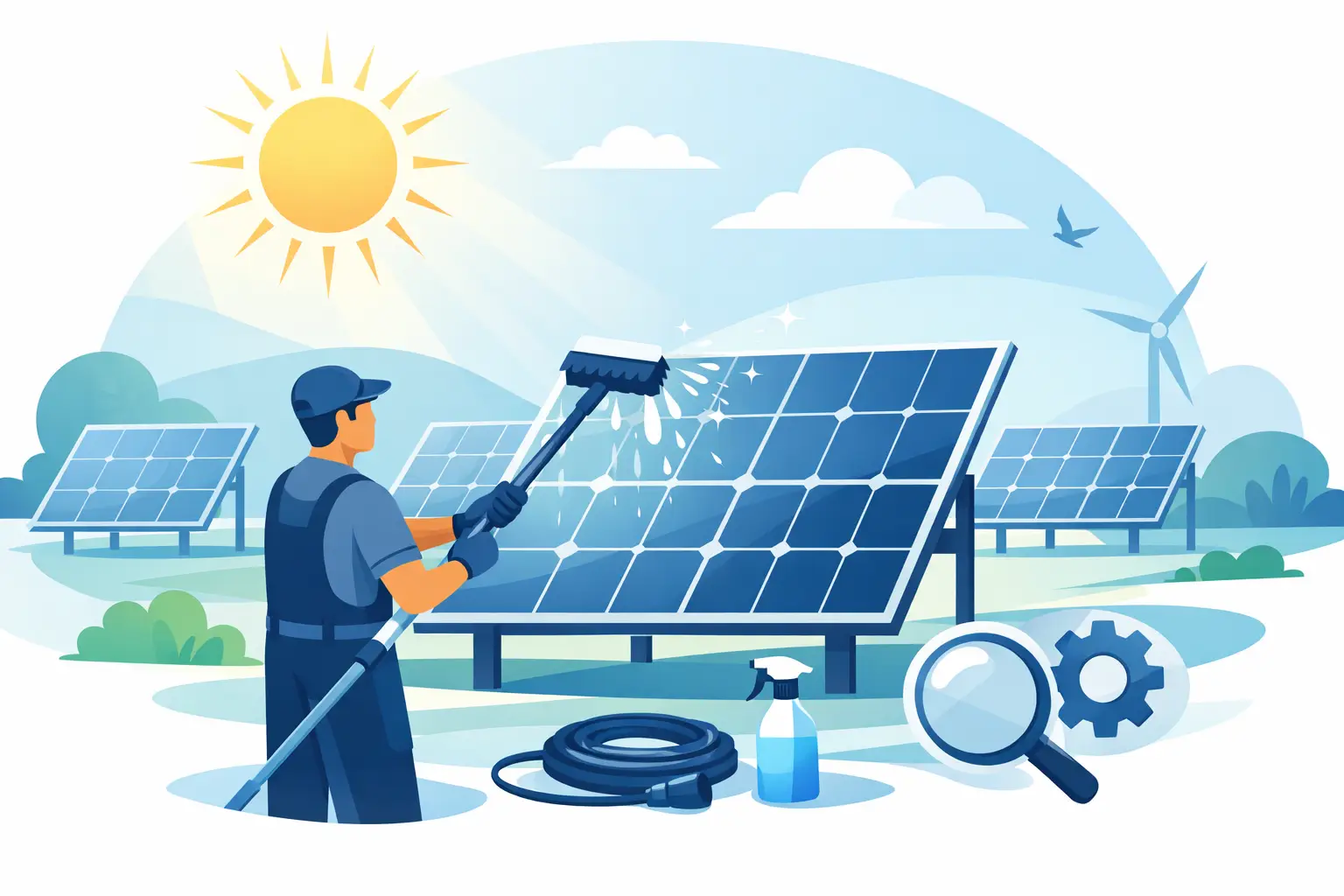
Use water and a soft brush, sponge, or non-abrasive tool designed for solar glass. Avoid harsh chemicals and anything rough enough to leave scratches. It is also smart to clean panels early in the morning or later in the evening when surfaces are cooler. Spraying cold water onto hot panels can create unnecessary stress.
Safety comes first. If your system is on a steep roof, a multi-story building, or a hard-to-access commercial structure, do not try to handle it yourself. Professional cleaning is the better choice. The cost of service is usually far less than the cost of an injury or accidental damage.
What to inspect from the ground
You do not need to climb onto the roof to perform a basic system check. In fact, for most owners, a ground-level inspection is the safest and smartest option. Look for anything that seems new, loose, broken, or out of place.
Check for debris around the array, especially after storms or high winds. Leaves, branches, and nesting materials can collect near panels or under the racking. Look for signs of new shading from tree growth as well. A branch that was harmless a year ago may now be cutting into production during peak sun hours.
You should also watch for visible panel damage such as cracked glass, discoloration, burn marks, or sections that appear foggy. Examine the area around the inverter if it is visible and accessible. Warning lights, fault messages, unusual sounds, or signs of water intrusion should be taken seriously.
If your solar system is paired with battery storage, smart electrical equipment, or EV charging infrastructure, pay attention to those components too. Solar performance is not just about the panels. A system works best when generation, storage, and power management equipment are all operating correctly.
How often should solar panels be maintained?
There is no perfect schedule for every property. A residential rooftop system in a relatively clean environment may only need a visual check every few months and cleaning once or twice a year. A commercial property in a dusty area may benefit from more frequent inspections and scheduled cleanings.
A practical rule is to review your monitoring data monthly, visually inspect the system after major storms, and arrange professional service whenever production drops without a clear explanation. If your installer offers maintenance plans, those can be a smart option for owners who prefer predictable upkeep and documented service history.
This is one of those cases where more is not always better. Overhandling a system, especially by inexperienced crews, can create avoidable wear. Maintenance should be consistent and informed, not excessive.
When professional solar service makes sense
Some maintenance tasks are simple. Others absolutely belong in professional hands. Electrical diagnostics, inverter troubleshooting, roof-level inspections, wiring repairs, and mounting checks should be handled by qualified technicians.
That matters for both safety and warranty protection. Many manufacturers have specific requirements around repairs and approved service methods. If someone untrained opens equipment, modifies wiring, or uses the wrong tools, it can complicate future warranty claims.
Professional service is also valuable when the issue is not obvious. A system can appear clean and intact while still underperforming due to hidden electrical faults, degraded connectors, inverter issues, or isolated panel failure. Technicians can test output, inspect connections, and confirm whether the problem is surface-level or deeper in the system.
For owners who want one partner for installation, service, storage, and long-term support, working with an experienced provider such as LA Solar Group can simplify the entire process and reduce guesswork over the life of the system.
Common mistakes to avoid
The biggest mistake is assuming no news is good news. Solar systems are reliable, but they should still be monitored. Waiting until your electric bill jumps is not the best way to discover a problem.
Another common mistake is cleaning panels with the wrong tools. Pressure washers, abrasive pads, strong detergents, and rooftop DIY methods can do more harm than good. Panels are durable, but the glass surface, frame edges, and wiring connections still need careful handling.
It is also easy to overlook shading. A solar array that was perfectly placed at installation can lose efficiency over time if nearby trees grow or new structures block sunlight. Even partial shading can affect output more than many owners realize.
Finally, do not ignore the roof itself. Since solar panels sit on top of your roofing system, roof condition matters. If you have signs of leaks, aging materials, or structural wear, address those issues quickly. Solar and roofing should work together, not compete for attention.
A maintenance mindset that protects savings
The best solar maintenance plan is not complicated. It is a steady routine built around monitoring, safe cleaning, visible inspections, and timely service when something changes. That approach helps protect production, supports equipment longevity, and keeps your investment working the way it was meant to.
If your system is producing as expected, panels look clean, and no faults are showing, there is no need to interfere just for the sake of doing something. But if output slips, debris builds up, or equipment starts sending warning signs, fast action usually pays for itself. A little attention at the right time can preserve years of energy savings and keep your system delivering the value you installed it for.
The smartest maintenance habit is simple: treat your solar system like any other high-value part of the property – not with constant worry, but with enough attention to keep it performing at its best.