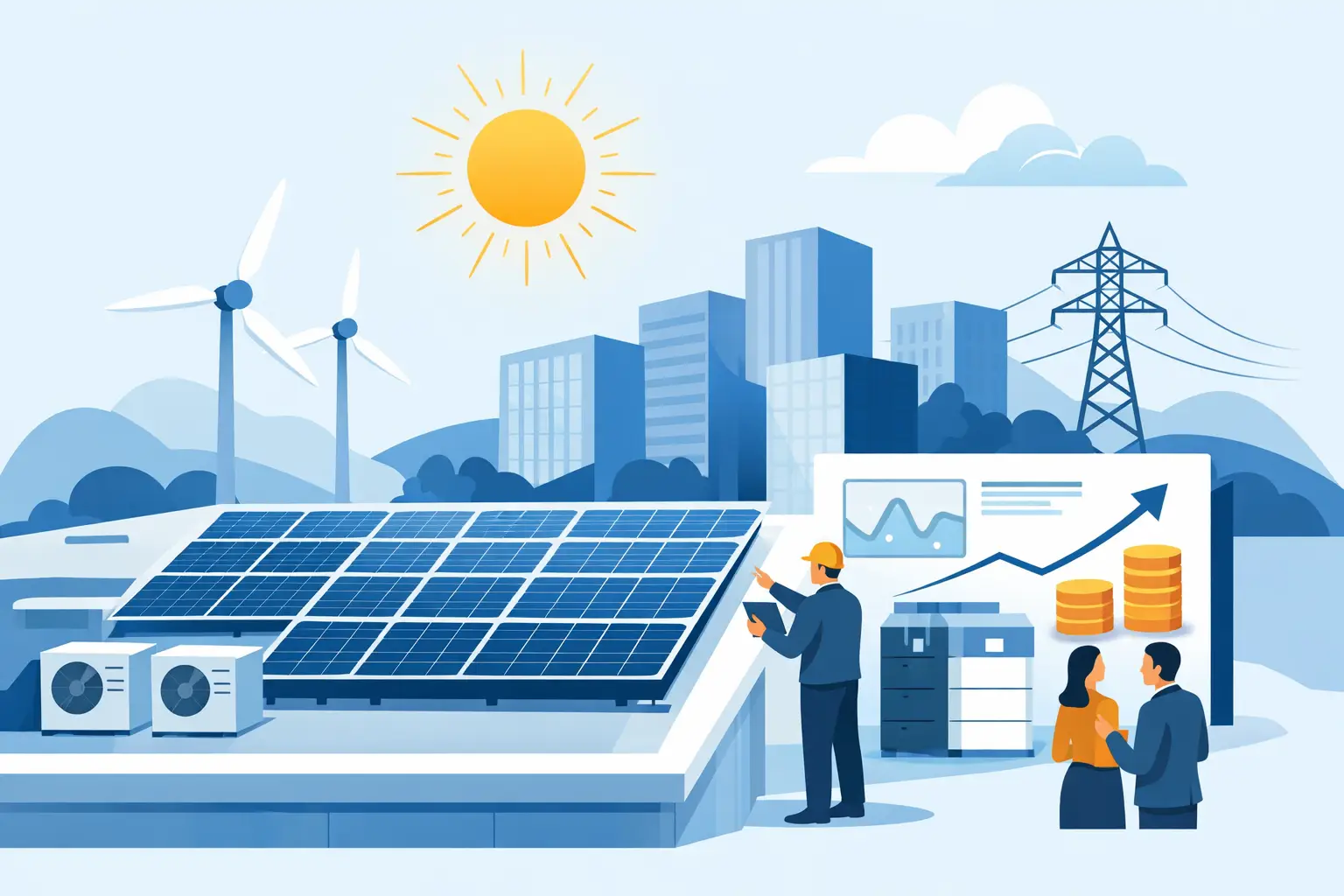
A commercial solar project can look great on paper and still underperform for years if the design is off by a few critical decisions. Panel count, roof layout, utility rate structure, backup needs, and future load growth all matter. That is why commercial solar system design is not just about fitting modules on a roof. It is about building an energy asset that lowers operating costs and keeps working the way your business needs it to.
For property owners, facility managers, and business operators, the real question is simple: will the system produce the savings you expect without creating new headaches? Good design answers that before installation starts. It accounts for your building, your utility bill, your demand profile, your equipment, and the practical realities of construction and long-term service.
What commercial solar system design really includes
The phrase sounds technical, but the goal is straightforward. A well-designed commercial system should maximize production, protect return on investment, and fit the site without compromising safety or operations.
That starts with energy usage. A designer needs more than a rough monthly bill total. Interval data, seasonal swings, occupancy patterns, and major equipment loads all tell a different story than annual consumption alone. A warehouse that peaks in the afternoon has different design priorities than an office building with predictable weekday loads or a retail site with heavy weekend usage.
Then there is the physical site. Roof age, structural capacity, shading, available square footage, electrical infrastructure, and access paths all shape the system. Some buildings can support a large rooftop array easily. Others may need a smaller system, canopy installation, electrical upgrades, or roof work before solar makes financial sense.
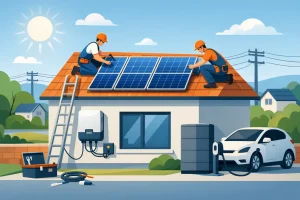
This is also where long-term planning matters. If a business plans to add EV charging, electrify HVAC, expand operations, or add battery storage later, the design should leave room for that. Designing only for current usage can limit savings later and make future upgrades more expensive than they need to be.
The biggest factors that affect system performance
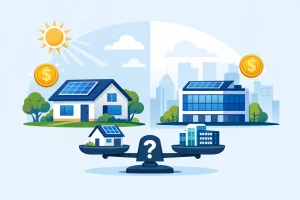
The most common mistake in commercial solar system design is treating production estimates as the whole story. Production matters, but value comes from how that production lines up with your rate structure and facility operations.
Load profile and utility rates
Two businesses can use the same amount of electricity and get very different results from solar. One may benefit most from offsetting expensive daytime consumption. Another may be paying steep demand charges, where short peaks in usage drive a large part of the bill. In that case, solar alone may help, but solar paired with storage or operational changes may produce a better financial outcome.
Net metering rules, time-of-use pricing, and interconnection policies also change the design strategy. In some areas, oversizing a system makes sense. In others, exporting too much power to the grid is less valuable than self-consuming more of what you generate. Good design follows the tariff, not guesswork.
Roof condition and available space
A commercial roof is often the most obvious location, but not every roof is equally suited for solar. Membrane type, age, slope, obstructions, parapets, and HVAC equipment can limit layout options. If the roof may need replacement in a few years, it is usually smarter to address that before installation rather than pay to remove and reinstall the system later.
Spacing matters too. A layout that squeezes in more panels is not automatically better if it creates maintenance access issues or increases shading losses between rows. More modules do not always mean more usable value.
Equipment selection
Panel wattage gets attention because it is easy to compare, but it is only one part of the design. Inverters, racking, monitoring, and balance-of-system components all affect reliability and serviceability.
For some sites, string inverters may be the right fit because they simplify large commercial layouts and reduce cost. For others, module-level power electronics can help in more complex roof conditions or where shading is an issue. There is no universal winner. The best choice depends on site layout, operations, monitoring priorities, and budget.
Interconnection and electrical integration
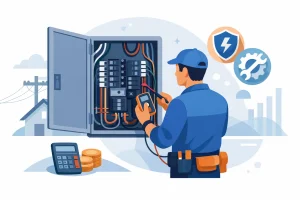
A system can be perfectly designed on the roof and still hit delays or added costs at the electrical side. Main service panel capacity, transformer limitations, utility requirements, and code compliance all have to be addressed early.
This is one reason experienced, full-service execution matters. Commercial projects move faster and with fewer surprises when the design team understands permitting, utility coordination, electrical upgrades, and post-install support from the start.
Designing for savings, not just system size
Many buyers start by asking how many kilowatts they need. That is understandable, but system size alone does not tell you whether the project is optimized.
The better question is what level of offset delivers the strongest return given your usage and rate structure. For some businesses, covering 60 to 80 percent of annual consumption may produce the best balance of cost and payback. For others, especially sites with favorable export rules or high on-site daytime demand, a larger system may be justified.
There are trade-offs. A bigger system can increase energy independence and future-proof a property, but only if the utility economics support it. A smaller system may offer a faster payback, but it can leave savings on the table if your load grows. Strong design looks at first-year savings, long-term production, degradation, maintenance access, financing structure, and the likely trajectory of utility prices.
When battery storage should be part of the design
Not every commercial solar installation needs batteries, but more businesses are finding that storage improves the project economics or operational value. If your facility faces demand charges, outage risk, or time-of-use rates with expensive peak periods, storage can do more than provide backup.
It can shave peaks, shift solar energy into higher-value hours, and support critical loads during grid interruptions. That matters for businesses where downtime is costly, whether that means lost sales, interrupted operations, or tenant dissatisfaction.
Still, batteries are not automatic. They add upfront cost, and the value depends heavily on how the site consumes power and what the utility tariff rewards. The right approach is to model both scenarios – solar only and solar plus storage – and compare them honestly.
Why turnkey execution matters in commercial projects
Commercial buyers are not just buying equipment. They are buying risk reduction. The fewer handoffs between roof work, engineering, permitting, installation, financing, and service, the fewer chances there are for delays, scope gaps, and finger-pointing.
That is especially true when a project involves older roofs, service upgrades, carport structures, or future electrification plans. A one-stop provider can coordinate the moving parts more efficiently and design with the full project in mind instead of treating solar as an isolated add-on.
For many businesses, that is where experience creates real value. A company that has handled thousands of installations and understands how to move from design through service can often spot issues earlier and build a cleaner path to completion. LA Solar Group, for example, takes that full-project approach because commercial customers need more than panel placement. They need a partner that can think through cost, uptime, and long-term performance.
Common design mistakes that cost businesses money
The most expensive design errors are usually not dramatic. They are small decisions that reduce output, complicate maintenance, or weaken ROI over time.
One is ignoring the load profile and designing to offset an annual usage number without considering when electricity is actually consumed. Another is underestimating roof constraints or postponing roof improvements that should happen before solar installation. A third is focusing too heavily on low upfront cost and not enough on equipment reliability, monitoring quality, or service support.
There is also the issue of future readiness. If your business may add EV chargers, expand square footage, or electrify more systems, the design should account for that now. Leaving no room in the layout or electrical plan can turn a straightforward future upgrade into a costly redesign.
What to expect from a strong commercial solar design process
A serious design process should feel detailed, not confusing. You should expect a review of utility bills and interval data, a site assessment, roof and electrical evaluation, production modeling, and a financial analysis based on actual utility rules.
You should also expect clear conversations about trade-offs. If a roof section has poor exposure, a good partner should say so. If storage improves resilience but extends payback, that should be explained plainly. If a financing option changes the economics, you should see that in black and white.
That kind of transparency matters because the right design is rarely the one with the highest panel count or the lowest sticker price. It is the one that aligns with how your property operates and what your business is trying to achieve over the next 10 to 25 years.
Commercial solar is a long-term investment, and the design phase is where most of the value gets decided. Get that part right, and the system can reduce electricity costs, support operational stability, and strengthen the property for years. Get it wrong, and even premium equipment may never deliver the return you expected. The best next step is not chasing the biggest system. It is asking for a design that fits your building, your numbers, and your plans.