If you are pricing a solar system, the biggest decision usually is not the panels. It is how you plan to pay for them. The solar loan vs cash question shapes your monthly savings, your long-term return, and how quickly the system starts working in your favor.
There is no one-size-fits-all answer. Cash can deliver the strongest lifetime value. A loan can let you go solar sooner, preserve liquidity, and still reduce your utility bill from day one. The right move depends on your tax position, interest rate, electric bill, and how much flexibility you want to keep.
Solar loan vs cash: the real difference
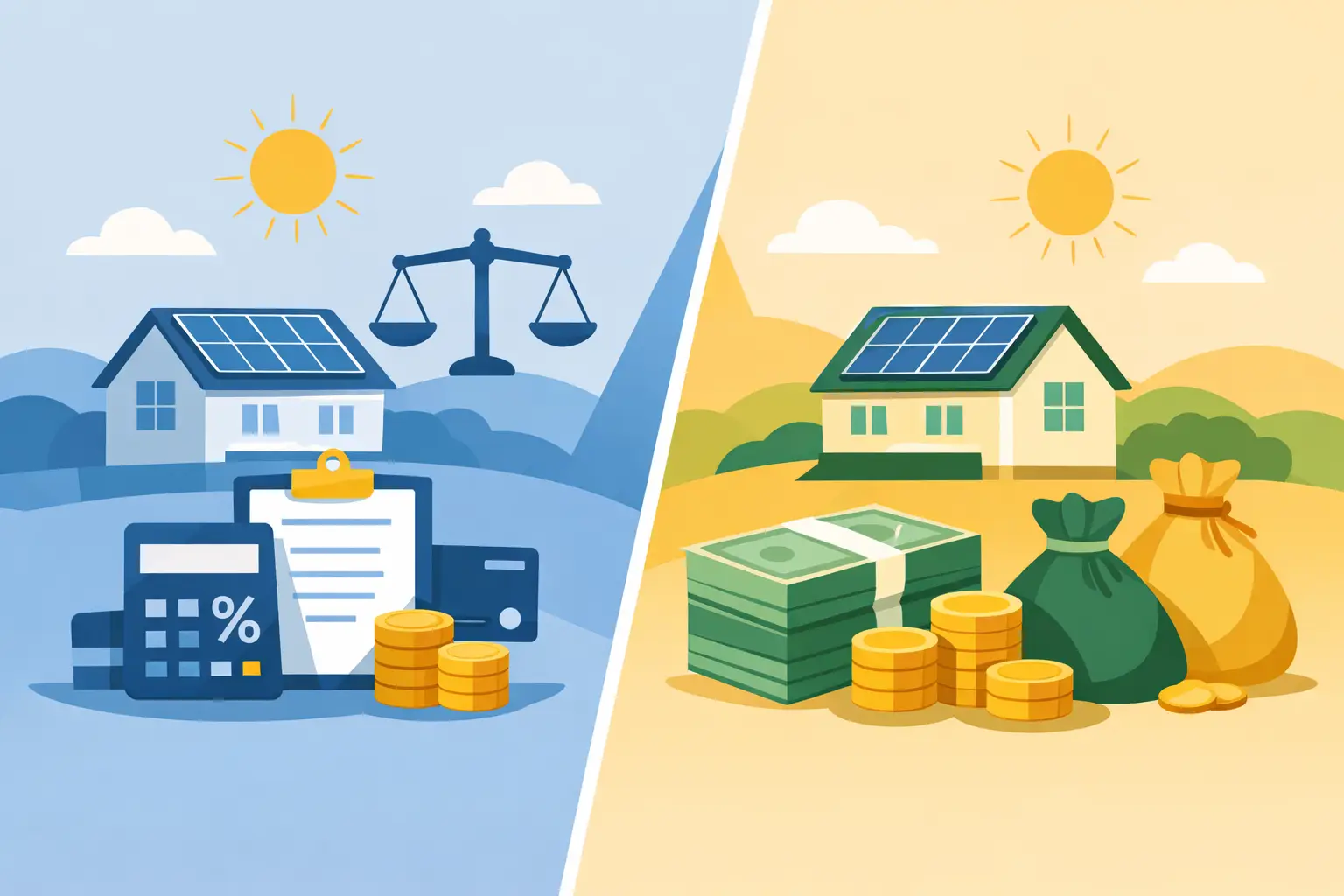
At a high level, paying cash means you buy the system outright and own it immediately with no lender involved. A solar loan lets you spread the cost over time, usually in exchange for interest and, in some cases, dealer fees built into the financing.
That sounds simple, but the financial impact is very different. A cash purchase usually produces the lowest total system cost because you avoid financing charges. Your payback period is often shorter, and every dollar of production after that point is pure benefit. If your goal is maximum long-term savings, cash usually has the edge.
A loan changes the math by adding monthly payments, but it also lowers the barrier to entry. Instead of waiting years to save up for a system, you can install now and start offsetting rising electric rates right away. For many homeowners and business owners, that timing matters more than achieving the absolute highest return on paper.
When paying cash makes the most sense
Cash is typically the strongest option for buyers who have available funds and want the best overall economics. If you can pay upfront without straining your reserves, you avoid interest and keep the project cost cleaner and easier to evaluate.
This matters because solar is already a long-term asset. When you remove financing costs, you can often reach break-even sooner and improve your lifetime savings significantly. In markets with high utility rates, that difference can be substantial.
Cash also gives you a simpler ownership experience. There is no lender approval process, no loan agreement to manage, and no concern about how prepayment terms work. You still need a quality design, strong equipment, and a properly installed system, but the financial side is more straightforward.
That said, paying cash is not automatically the smartest move just because you can. If using that capital would leave you short on emergency reserves, business operating cash, or planned home upgrades, the opportunity cost may be too high. Solar should strengthen your finances, not create pressure elsewhere.
Cash buyers usually value speed to payoff
A cash buyer is often focused on total return over time. They want lower lifetime cost, fewer moving parts, and the highest value from the federal tax credit and utility savings. If that sounds like you, cash is likely worth serious consideration.
When a solar loan is the better tool
A solar loan is often the right fit when preserving cash is more valuable than avoiding interest. That can be true for homeowners planning a remodel, families who want to keep a healthy reserve, or business owners who need to protect working capital.
The biggest advantage is access. Instead of delaying solar until you have the full amount available, financing lets you install now and start reducing electricity costs immediately. In many cases, part of the monthly loan payment is offset by lower utility bills, which can make the transition easier to manage.
Loans also make it easier to pair solar with related upgrades like battery storage, a main panel upgrade, EV charging, or roofing work tied to the installation. For many properties, the best energy plan is not just panels alone. Financing can support a more complete solution without requiring a large upfront check.
Still, not all solar loans are created equal. Interest rate matters. Loan term matters. Dealer fees matter. Some low-rate offers look attractive until you realize the financed amount includes a significant upfront fee. The monthly payment may look better, but the total cost can rise.
A good loan should support savings, not erase them
The strongest loan scenarios are the ones where financing keeps the project affordable without wiping out the benefit of going solar. That usually means competitive terms, clear disclosures, and a system sized correctly for your usage. If the financing structure is too expensive, it can dilute the financial upside.
Tax credits and incentives in a solar loan vs cash decision
Whether you pay cash or use a loan, ownership is what usually matters for the federal solar tax credit. If you own the system, you may be eligible to claim the credit, subject to your tax situation and guidance from your tax advisor.
That is an important distinction because both cash buyers and loan customers can potentially benefit. Leasing is different, but that is a separate conversation.
Where people get tripped up is timing and expectations. With cash, the tax credit can help improve your effective net cost after filing. With a loan, many financing structures assume you will apply that tax credit toward the principal within a certain period to keep payments lower. If you do not, your monthly payment may increase later depending on the loan terms.
This is one reason clear planning matters. The tax credit is valuable, but it should not be treated like automatic cash in hand on installation day. Your eligibility and benefit depend on your tax liability and personal situation.
How to compare the numbers without getting misled
The best way to evaluate solar loan vs cash is to look past the sales headline and compare four practical numbers: total system cost, estimated monthly utility savings, total financing cost, and long-term net benefit.
If you are paying cash, ask what your net project cost looks like after incentives and what the expected payback period is based on realistic production estimates. If you are financing, ask for the total amount financed, the APR or interest rate, any dealer fees, the term length, and what happens if you do or do not apply the tax credit to the loan.
Then compare that against your current electric bill and likely utility inflation. A financed system can still be an excellent move if it starts reducing your effective monthly energy spend right away and protects you from rising rates. A cash system can still be the superior long-term investment if your main goal is maximum savings over 20 to 30 years.
Watch for the wrong comparison
One common mistake is comparing a cash quote from one installer with a financed quote from another without accounting for fees, equipment differences, warranty coverage, and scope of work. The structure matters, but so does the quality of the project. A lower number on paper is not necessarily the better value.
Business owners have a slightly different equation
For commercial projects, the solar loan vs cash decision often comes down to capital strategy. A business may prefer to keep cash available for expansion, payroll, inventory, or core operations even if cash purchase offers a stronger raw return.
At the same time, some businesses want the cleanest possible economics and choose cash to reduce project cost and simplify ownership. Commercial buyers also tend to care deeply about depreciation, tax treatment, demand charges, and how solar integrates with storage or shade structures. The right answer often depends on broader financial planning, not just the system price.
So which option should you choose?
Choose cash if you have the funds available, want the strongest lifetime savings, and value a shorter path to full payback. Choose a loan if you want to go solar now, keep your cash available, and secure lower energy costs without a large upfront payment.
For many buyers, the decision is less about which option is universally better and more about which one fits their financial priorities. The strongest solar investment is the one you can sustain comfortably while still getting quality equipment, proper design, and dependable installation.
A good provider should be able to model both paths clearly and show you the trade-offs without pressure. That matters because the best result is not just getting solar installed. It is choosing a payment strategy that makes the system work for your property, your budget, and your long-term plans. Companies with deep installation experience, financing flexibility, and end-to-end project support, such as LA Solar Group, can make that comparison much easier to understand.
If you are close between the two, the practical question is simple: would you rather maximize total return or maximize flexibility? Once you answer that honestly, the right path usually becomes clear.