
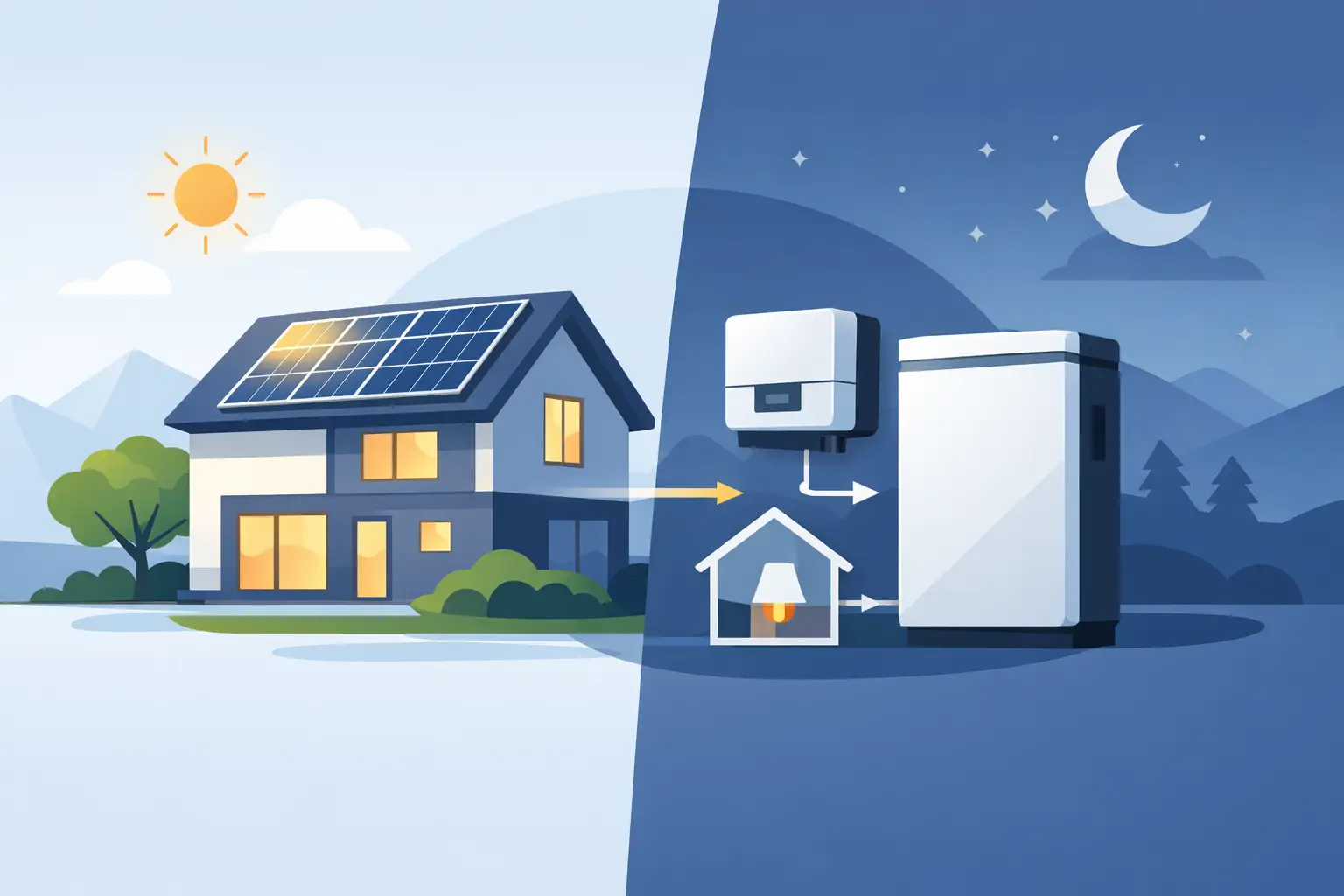
When the grid drops in the middle of a heat wave or your utility bill spikes again, battery storage stops feeling optional. The best home battery systems give homeowners something more valuable than just extra equipment – control over outages, peak rates, and how solar energy gets used after the sun goes down.
That said, there is no single battery that is best for every home. A family trying to keep lights, refrigeration, and Wi-Fi running through short outages has different needs than a homeowner who wants to back up air conditioning, avoid expensive time-of-use rates, and pair storage with a large solar system. The right choice depends on your electrical loads, your utility plan, your roof and panel setup, and how much backup you actually expect.
What makes the best home battery systems stand out
Battery marketing tends to focus on headline numbers, but most homeowners benefit more from understanding how the system behaves in real life. Capacity matters because it tells you how much energy is stored, usually measured in kilowatt-hours. Power matters just as much because it determines how many appliances the battery can run at once, especially during startup surges from HVAC systems, well pumps, or large kitchen equipment.
Cycle life, warranty terms, and chemistry also matter. Most leading residential batteries now use lithium iron phosphate or similarly stable lithium chemistries, which generally offer strong safety and long service life. The warranty should be read carefully. Some cover a set number of years, while others also include throughput limits or guaranteed retained capacity. A battery with a long headline warranty may still perform differently depending on how often it is charged and discharged.
Homeowners should also look at outage response time, whole-home versus partial-home backup options, expandability, and software quality. A battery is not just a box on the wall. It is part of a larger energy management system that has to communicate with your solar inverter, your main service panel, and sometimes smart electrical controls.
Best home battery systems to consider
Several products consistently rise to the top because they combine strong performance, broad compatibility, and dependable support. The best fit still depends on the project.
Tesla Powerwall
Tesla Powerwall remains one of the most recognized options for residential storage. It is popular for a reason. It offers a clean design, solid usable capacity, strong power output, and an app experience many homeowners find easy to manage. It can work well for backup power, solar self-consumption, and time-of-use savings.
Its strengths are brand familiarity and a straightforward whole-home backup path in many installations. But availability, installer network quality, and project-specific integration can vary. In some homes, especially those with complex electrical service or larger backup goals, other systems may offer more flexibility.
Enphase IQ Battery
Enphase is a strong option for homes already using Enphase microinverters or planning a full Enphase ecosystem. Its biggest advantage is modularity. That makes it attractive for homeowners who want to start smaller and expand later.
Enphase systems are often a smart fit when panel-level solar design is already part of the project. The trade-off is that modular systems can become more expensive on a per-kilowatt-hour basis than some larger-format batteries. Still, for homeowners who value monitoring, system visibility, and tight solar integration, it is a serious contender.
FranklinWH
FranklinWH has gained attention by targeting a practical problem many homeowners care about – backing up more of the house without overcomplicating the design. It offers strong power capability and is often considered for homes with larger loads or more ambitious backup expectations.
This system can be especially appealing when homeowners want more control over energy management and load handling. As with any newer brand compared with legacy names, installer experience matters. A well-designed Franklin system can perform extremely well, but product quality is only part of the equation.
Generac PWRcell
Generac has deep name recognition in backup power, and PWRcell appeals to homeowners who already think in terms of resilience first and bill savings second. It is often considered by people in outage-prone areas who want a storage system from a company associated with home backup equipment.
PWRcell can be configured in ways that make sense for larger backup ambitions. The main consideration is making sure the system design matches the home, especially if the project also includes solar and smart load management. Not every battery is equally simple to integrate in every scenario.
HomeGrid and other high-capacity options
Some homeowners need more than a standard backup package. Larger homes, electrically heated homes, or households with EV charging and heavy evening consumption may benefit from high-capacity battery platforms like HomeGrid or similar expandable systems.
These are not always the first choice for a typical suburban backup setup, but they can be the right choice when energy usage is high and the homeowner wants to store more solar production. In those cases, system architecture becomes more important than brand recognition.
How to choose the right battery for your home
The first question is not which battery is most popular. It is what you want the battery to do.
If your top priority is outage protection, start by identifying critical loads. For some homes, that means refrigeration, lighting, outlets, internet equipment, and maybe a garage door. For others, it includes central air conditioning, medical equipment, pool systems, or a well pump. The wider the backup scope, the more battery power and capacity you will likely need.
If your goal is bill savings, the battery has to be evaluated against your utility rate structure. In places with high evening pricing or demand-related charges, storage can shift energy use and improve the economics of solar. In areas with lower rates or favorable net metering, backup value may matter more than pure financial payback.
Solar compatibility also matters. Some batteries work best inside a tightly integrated ecosystem. Others are more flexible across inverter and panel configurations. If you already have solar, retrofitting a battery may narrow the best options. If you are installing solar and storage together, you have more freedom to optimize the full design from day one.
The installation matters as much as the battery
Homeowners often compare battery brands side by side and miss the larger issue. A premium battery installed with poor load planning or weak commissioning will not deliver premium results. The best home battery systems perform best when they are paired with accurate load calculations, the right inverter strategy, clean electrical work, and a service team that knows how to support the system after installation.
This is where a full-service provider has a real advantage. When solar, storage, panel upgrades, and roof considerations are handled under one project strategy, there is less guesswork and less finger-pointing if something needs attention later. For many homeowners, that project coordination is worth as much as the product itself.
A battery may also trigger other upgrades. Some homes need a smart main panel, a critical loads subpanel, or electrical service adjustments before storage can be installed properly. That does not make the project a bad investment. It just means the real cost and real performance need to be evaluated together.
Common trade-offs homeowners should expect
There is always a trade-off between upfront cost and backup depth. A smaller system lowers the purchase price but may only support essential circuits for a limited period. A larger system improves comfort and flexibility but increases project cost.
There is also a trade-off between simplicity and customization. Some battery platforms are very streamlined and user-friendly, but less flexible. Others allow more tailored backup design, load control, and expansion, but require stronger installer expertise and more planning.
And while many homeowners ask about running the entire house, the more practical question is whether the battery can support the house in the way you actually live. Backing up every load all at once is rarely necessary. Backing up the right loads well is what creates value.
What a smart buying decision looks like
A smart battery purchase starts with a real site evaluation, not a generic product recommendation. Your installer should review historical electricity usage, identify outage priorities, assess your panel and service capacity, and show you how the battery will perform during both normal operation and blackout conditions.
You should also ask direct questions about warranties, monitoring, expansion options, and service response. A battery is a long-term energy asset. It should be sold and installed that way.
For homeowners who want lower bills, stronger backup protection, and a more independent energy setup, battery storage can be one of the most practical upgrades available. The best choice is the one that fits your home, your utility environment, and your backup expectations without overselling what the system can do. If you plan the project correctly from the start, your battery will not just sit on the wall looking impressive. It will earn its place every day the grid gets more expensive or less reliable.