When the power goes out at 6 p.m. and the fridge, Wi-Fi, lights, and HVAC all go quiet at once, the question gets real fast: battery backup vs generator – which one actually makes sense for your property? For homeowners and business owners, this is not just about emergency power. It is about comfort, operating costs, noise, maintenance, and how much control you want over your energy long term.
The right answer depends on what you need to keep running, how often outages happen, and whether you want a backup system that works with solar or one that depends on fuel. Both options can protect your property. They just do it in very different ways.
Battery backup vs generator: the core difference
A battery backup stores electricity for later use. It can charge from the grid, from a solar system, or from both. When utility power fails, the battery automatically supplies stored power to selected circuits or, in some cases, the whole property.
A generator creates electricity on demand by burning fuel, usually natural gas, propane, diesel, or gasoline. Instead of storing energy ahead of time, it produces power during the outage as long as fuel is available and the unit is sized correctly.
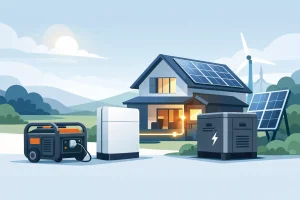
That distinction matters. A battery is about stored energy, quiet operation, and smart energy management. A generator is about fuel-based production and long-duration backup if fuel supply holds up. One is not automatically better than the other. The better choice depends on your priorities.
Where battery backup stands out
Battery systems are a strong fit for customers who want clean, quiet backup power and more control over electricity use every day, not just during outages. That is especially true in markets where utility rates are high and time-of-use billing can make evening power expensive.
A battery turns backup power into a daily asset. It can store lower-cost solar energy during the day and use it later when rates rise. That means the system may help reduce electric bills while also providing outage protection. A generator does not lower your utility bill when the grid is working normally.
There is also the user experience. Battery backup is quiet. There is no engine noise, no exhaust, and no fuel smell. For residential neighborhoods, that can be a major advantage. For businesses, it can mean less disruption to staff and customers.
Maintenance is another point in favor of batteries. Compared with generators, battery systems generally need much less ongoing service. There are no oil changes, spark plugs, or engine wear issues. You still need proper installation, monitoring, and occasional service checks, but the ownership experience is typically simpler.
Battery backup also pairs naturally with solar. If your goal is energy independence, this is where batteries make a strong case. Solar produces power during the day, the battery stores excess energy, and your property can use that stored energy at night or during an outage. For many customers, that combination is the biggest reason to choose battery storage.
Where generators still have an advantage
Generators remain a practical solution when long runtimes matter most. If you live in an area where outages can last several days, or if your facility needs to support large electrical loads continuously, a generator may be the more straightforward answer.
That is because batteries are limited by storage capacity. Once the stored energy is used, the battery needs to recharge from solar or the grid. If the outage happens overnight or during poor weather, battery runtime depends heavily on how much energy you have stored and how carefully you manage loads.
A generator, by contrast, can continue producing power as long as fuel is available. For some homes, that means keeping central air, well pumps, refrigeration, and other large loads running for extended periods. For some businesses, it means maintaining operations without waiting for the sun or rationing battery capacity.
Upfront cost can also favor certain generator setups, depending on system size and installation conditions. If your only goal is backup during occasional outages and you are not interested in solar integration or daily bill management, a generator may appear more cost-effective at first.
But first cost is not the whole story. Fuel costs, service requirements, noise, emissions, and lifespan all belong in the comparison.
Cost is more than the equipment price
When people compare battery backup vs generator, they often start with the purchase price and stop there. That can lead to the wrong decision.
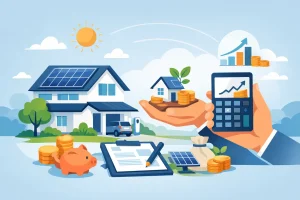
A battery system may cost more upfront, particularly if you want enough storage to back up major loads or the entire home. But it can also deliver value outside emergency events by reducing peak utility consumption, storing solar production, and improving how your property uses electricity every day.
A generator may have a lower initial price in some cases, but it comes with operating costs tied to fuel and maintenance. Over time, those expenses can add up. There is also the issue of usage frequency. If outages are rare, paying ongoing maintenance for a system you hardly use may not feel like a great investment.
For customers already considering solar, battery storage often makes more financial sense than treating backup power as a separate purchase. It becomes part of a broader energy strategy rather than a single-purpose machine sitting idle until the next outage.
Performance during real outages
Short outages and rolling blackouts tend to favor battery systems. They switch over quickly, often so fast that the interruption is barely noticeable. For electronics, lighting, refrigeration, internet service, and essential circuits, that can be ideal.
Long outages with heavy loads tend to favor generators, especially if fuel supply is stable. Running multiple air conditioners, electric resistance heating, or high-demand commercial loads for days can require a large battery bank, careful load planning, or both.
Still, battery performance depends a lot on system design. A well-sized battery paired with solar and smart load management can cover far more than many buyers expect. Essential loads backup is often enough for households that want refrigeration, lighting, outlets, internet, security systems, and a few comfort circuits without trying to power every appliance at once.
That is why proper sizing matters. The real question is not whether a battery or generator is better in the abstract. It is whether the system matches your actual outage profile and energy use.
Noise, emissions, and everyday livability
This is where many buyers stop comparing specs and start thinking about day-to-day reality.
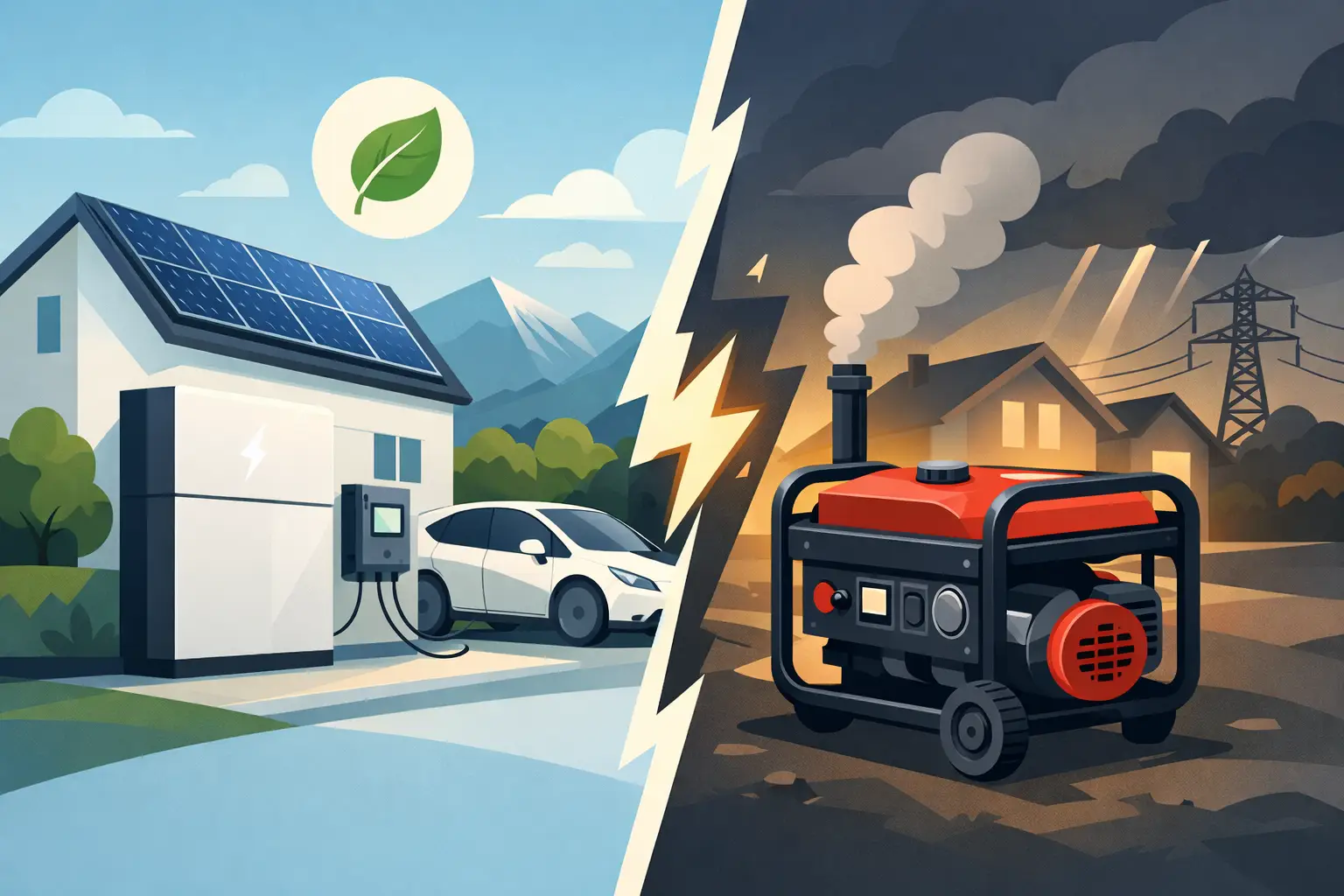
Generators are louder. Even standby units designed for residential use produce noticeable engine noise during operation. In some neighborhoods that is acceptable. In others, especially where homes are close together, it is a drawback.
Generators also produce emissions. If your priority is cleaner energy, a fuel-burning backup source works against that goal. Batteries do not create on-site emissions while operating, which makes them a better fit for customers who want backup power without the tradeoff of exhaust.
For businesses, this can matter even more. A battery system can support critical loads quietly and with less operational disruption. That is useful in office environments, retail spaces, and customer-facing properties where noise and fumes are not ideal.
Which option is better for solar homes and electrified buildings?
If your property already has solar, or you plan to add solar, battery backup is usually the more natural fit. It allows you to keep and use more of the energy your system produces. It also helps support a modern electrification strategy that may include EV charging, smart panel upgrades, and more efficient electric appliances.
A generator can still play a role as pure backup, but it does not help optimize solar production. It does not store excess daytime energy, and it does not improve your utility rate strategy. It solves a narrower problem.
That is why many customers working toward lower bills and higher energy independence lean toward batteries. The system does more than wait for an emergency. It becomes part of how the property runs.
How to choose without overbuying
Start with three questions. First, what absolutely needs to stay on during an outage? Second, how long do outages usually last in your area? Third, do you want backup power only, or do you also want bill savings and better use of solar energy?
If your answer is that you need quiet operation, low maintenance, solar compatibility, and protection from short to moderate outages, battery storage is often the better investment. If your answer is that you need to run large loads for extended outages and fuel access is not a concern, a generator may still be the right tool.
Some properties even benefit from a hybrid strategy, but most buyers do not need to complicate the decision. They need a system sized for their real priorities, not a one-size-fits-all pitch.
That is where an experienced installer matters. A provider that understands solar, storage, load calculations, panel upgrades, and backup design can help you avoid paying for capacity you do not need or ending up with a system that falls short when the grid fails. For customers comparing options, LA Solar Group approaches backup power as part of a complete energy plan, not an isolated product decision.
The best backup system is the one that matches how your property actually uses power. If you choose with that in mind, you will get more than outage protection – you will get a setup that feels like a smart upgrade every day of the year.