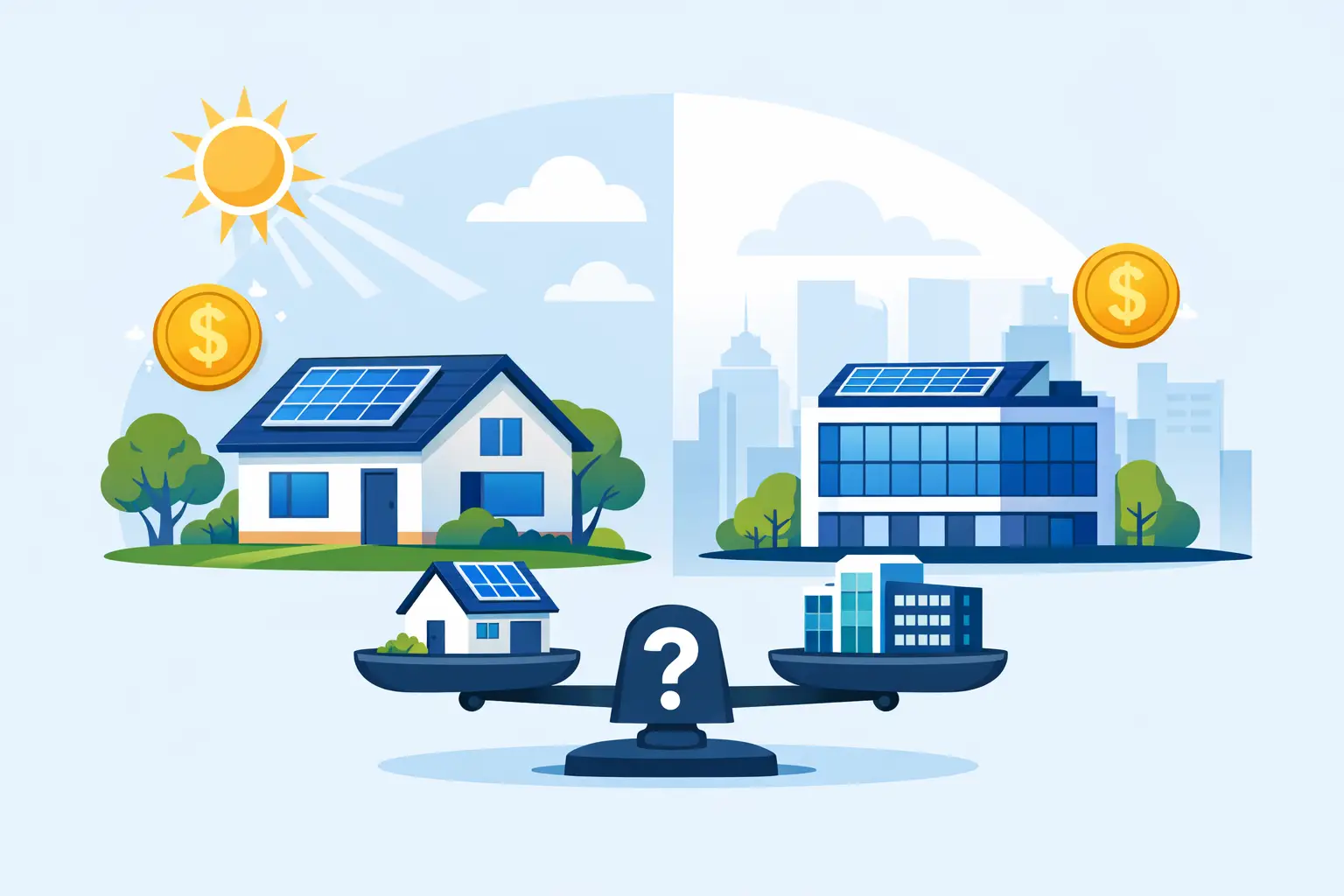
If your electric bill keeps climbing while utility rates show no sign of slowing down, the question becomes very practical: is solar worth it? For many homeowners and business owners in the US, the answer is yes – but not for the same reasons, and not in every situation.
Solar is not a one-size-fits-all purchase. The value depends on what you pay for electricity now, how much sun your property gets, how your roof or site is set up, whether you want backup power, and how long you plan to stay in the property. The good news is that when the numbers line up, solar can do more than lower monthly bills. It can turn energy from a recurring expense into a controlled long-term investment.
Is solar worth it financially?
For most property owners, this is the first and most important question. Solar makes financial sense when your system can offset expensive utility power with lower-cost electricity generated on-site. In states with high rates, strong sun exposure, and favorable incentives, the savings can be significant.
A properly designed solar system can reduce your dependence on the grid and cut monthly utility bills for years. If you finance the system, your monthly payment may still come in below what you were paying the utility, which is why many customers look at solar as bill replacement rather than a new expense. If you pay cash, the long-term return is often even stronger because you avoid financing costs and lock in lower energy costs sooner.
The federal solar tax credit also changes the math in a big way. For eligible property owners, that incentive lowers the effective system cost and shortens payback time. Some local utilities and state programs add more value, although those vary by market and can change over time.
That said, solar is not automatically a fast win everywhere. If your current electric bill is low, your roof has a lot of shade, or your utility structure offers limited benefit for exported power, your savings may build more slowly. This is why real system design matters. A quality proposal should model your consumption, rate plan, roof layout, and projected production – not just give you a generic estimate.
What makes solar worth it for homeowners?
For homeowners, the main benefit is usually lower electricity costs. But cost savings are only part of the story. Solar can also give you more predictability in a market where utility rates tend to rise over time. Instead of being fully exposed to future increases, you produce a large share of your own power.
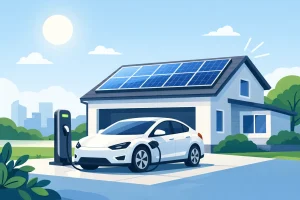
That stability matters even more for households with high daytime energy use. If you work from home, run air conditioning heavily, charge an EV, heat a pool, or have a larger family, your home likely uses enough electricity to make solar especially attractive. The more expensive grid power you can avoid, the stronger the case becomes.
There is also the property-upgrade angle. Buyers increasingly recognize solar as a modern home feature, especially in markets where energy costs are high and backup power is becoming more important. While resale value depends on local demand and system structure, an owned solar system can make a home more appealing.
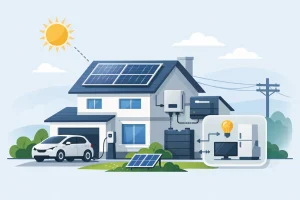
Then there is resilience. Solar alone does not keep the lights on during an outage in most grid-tied setups. But paired with battery storage, it can provide meaningful backup for key circuits or even whole-home loads, depending on system size. For homeowners dealing with wildfire shutoffs, storm outages, or unstable grid performance, that added control can be just as valuable as monthly savings.
Is solar worth it for businesses?
For commercial properties, the answer often comes down to operational efficiency and long-term cost control. Businesses with large daytime loads are especially well positioned because that is when solar production is strongest. Office buildings, warehouses, manufacturing facilities, retail centers, and multifamily properties can all benefit if the usage profile fits.
Commercial solar can lower overhead, improve budgeting, and support a stronger return on the property itself. In many cases, businesses can also benefit from tax advantages and depreciation treatment that improve project economics beyond simple bill reduction.
There is a branding benefit too, but for most owners it is secondary. The bigger draw is straightforward: lower energy expense, better control over future utility volatility, and a system that works for decades when it is properly installed and maintained.
Battery storage can also be strategic for businesses. It may help reduce demand charges, provide backup for critical operations, and support better energy management across the site. If downtime is expensive, the value of storage goes well beyond convenience.
When solar may not be worth it
A credible solar provider should be honest about the trade-offs. Solar may be less compelling if your roof is near the end of its life, heavily shaded, or too small for the energy offset you want. It may also be a weaker fit if you plan to move very soon and your local market does not consistently reward owned solar at resale.
Utility policy matters too. In some areas, compensation for excess energy sent back to the grid is lower than many customers expect. That does not kill the value of solar, but it can shift the best strategy toward right-sizing the system and adding battery storage rather than oversizing for exports.
Your usage pattern also affects returns. If your property uses most of its power at night and you do not have storage, your savings may not be as strong as someone whose usage aligns closely with daytime production. This is why a design-first approach matters. The best solar system is not the biggest one. It is the one built around how your property actually uses energy.
The battery question changes the answer
For many buyers, asking is solar worth it now leads quickly to another question: should I add a battery? The answer depends on your priorities.
If your main goal is maximum bill savings, solar alone may be enough in the right market. But if you want outage protection, better use of your own solar power, or more flexibility under changing utility rules, a battery can add a lot of value. In areas with time-of-use rates, batteries can help you avoid expensive peak pricing by storing lower-cost energy and using it later.
Storage does increase project cost, so it should be sized carefully. Not every home needs whole-home backup, and not every business needs a large battery bank. Often the best solution is a right-sized storage system that supports critical loads and gives you a meaningful resilience upgrade without overspending.
Why installation quality matters as much as price
Solar is absolutely a financial decision, but it is also a construction and service decision. A low headline price means less if the system is poorly designed, underproduces, or leaves you chasing different contractors for roof work, electrical upgrades, permitting issues, and post-install support.
That is where full-service execution matters. A provider that can evaluate the roof, electrical panel, battery readiness, financing options, and long-term service needs under one roof gives you a much clearer path to results. You are not just buying panels. You are buying system performance, code-compliant installation, and support that lasts beyond commissioning.
This is one reason many customers choose established companies like LA Solar Group. Experience, scale, and integrated service can reduce friction throughout the process, especially when a project includes storage, roofing, EV charging, or main panel upgrades.
So, is solar worth it?
If you own a home or commercial property with decent sun exposure, a suitable roof or site, and meaningful electricity usage, solar is often worth it. It can lower utility costs, improve energy independence, and turn a rising monthly expense into a more predictable long-term plan.
But the strongest case for solar does not come from a national average or a sales pitch. It comes from your numbers – your bill, your rate plan, your roof, your tax situation, and your goals. For some customers, the value is fastest payback. For others, it is backup power, protection from rate hikes, or a smarter way to manage a high-energy property.
The best next step is simple: get a real property-specific analysis and compare it to what you are paying now. When solar is designed correctly, priced competitively, and installed by a team that can support the full project, it stops being a vague idea and starts looking like a smart upgrade you can measure every month.