A blackout usually makes one thing clear fast: most homes are not built to keep running on their own. If you have ever wondered how home battery backup works, the short answer is this – it stores electricity for later use and automatically sends that power to selected home circuits when the grid goes down or when energy costs are highest.
That sounds simple, but the real value is in how the system manages power behind the scenes. A well-designed battery backup setup can keep essential appliances running, reduce peak utility charges, and work alongside solar to give your home more control over energy use. For homeowners looking for lower bills and better outage protection, understanding the basics helps you make a smarter investment.
How home battery backup works in a real house
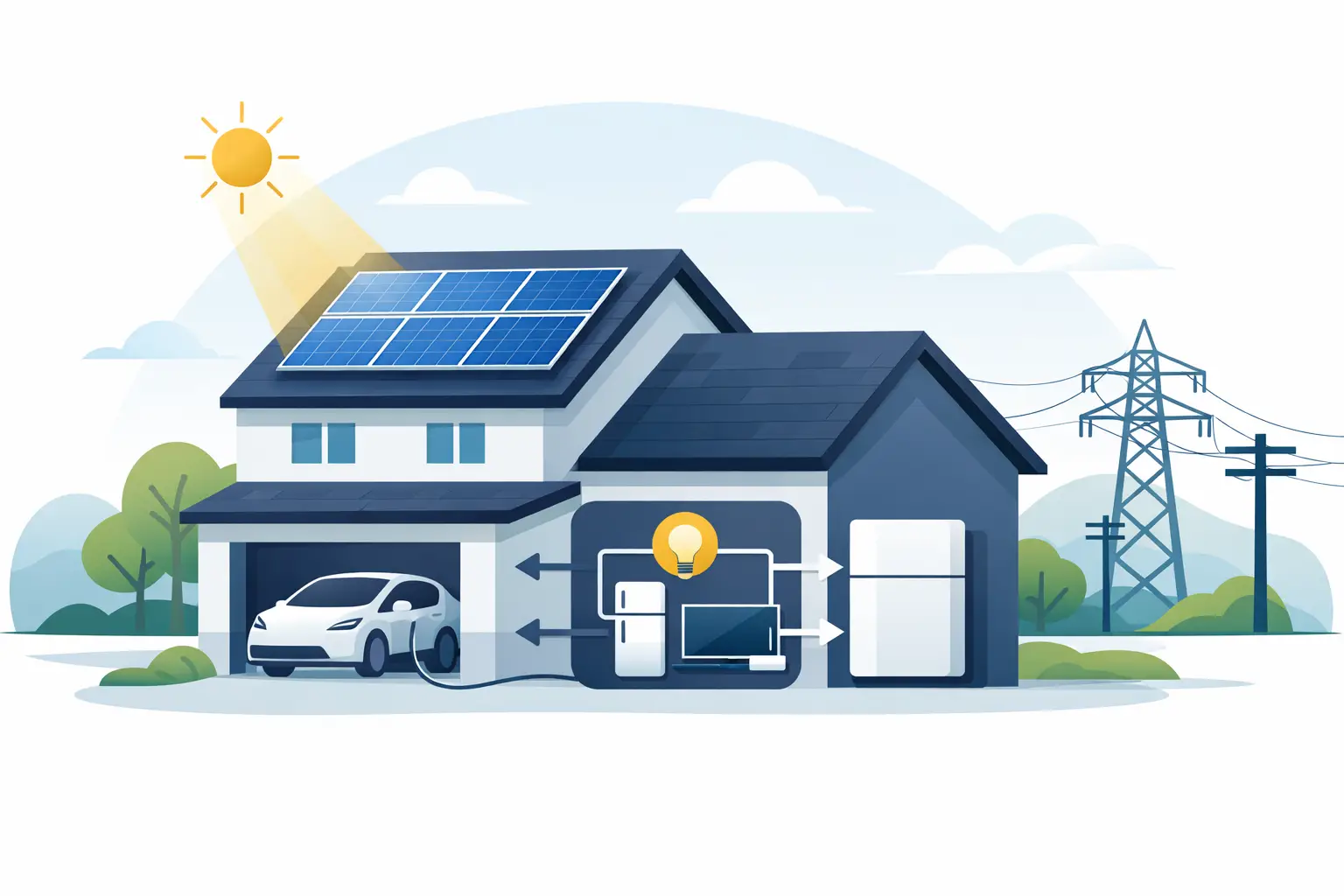
A home battery backup system is usually made up of four main parts: the battery itself, an inverter, a transfer mechanism that isolates your home from the utility during an outage, and an electrical panel setup that decides what gets powered.
Under normal conditions, the battery charges from either the utility grid, a solar system, or both. That stored electricity stays on standby until the system is told to use it. Depending on how the system is programmed, the battery may discharge during a grid outage, during expensive peak-rate hours, or both.
When the utility power fails, the system detects the outage almost immediately. It then disconnects from the grid and begins supplying power to your backed-up loads. This matters for safety as much as convenience. A battery system cannot send electricity back into utility lines during an outage because that would create a hazard for line workers.
Once the outage is over, the system reconnects to the grid and starts recharging the battery. If solar is installed, your panels may continue charging the battery during daylight, which can extend your backup window well beyond what the battery could provide on its own.
What each part of the system does
The battery is the storage tank. Most modern residential systems use lithium-ion chemistry because it offers good energy density, long cycle life, and compact size. Battery capacity is measured in kilowatt-hours, which tells you how much energy is available. Power output is measured in kilowatts, which tells you how much the battery can run at one time.
That distinction matters. A battery may store enough energy to run your refrigerator, lights, internet, and a few outlets for many hours, but that does not mean it can start every large electric load in the house at the same time. Air conditioners, electric ovens, pool pumps, and EV chargers can quickly push a system past its output limit if the design is not matched to your usage.
The inverter does the translation work. Batteries store electricity as direct current, but your home uses alternating current. The inverter converts battery power into usable household electricity. In many systems, the inverter also manages solar production, battery charging, and communication with the grid.
The transfer equipment is what allows the switch to happen safely. During an outage, it separates your backed-up circuits from the utility grid and forms a local power island in your home. Some systems back up a critical loads panel only, while others are designed for partial-home or near whole-home backup.
The electrical panel strategy is where system performance becomes personal. One homeowner may only want to keep essentials running. Another may want to support refrigeration, lighting, office equipment, security, and part of the HVAC system. The right design depends on what you want powered, how long you want backup to last, and how much equipment you are willing to install.
How batteries work with solar
Solar and battery storage are often paired because they solve different parts of the same problem. Solar generates electricity when the sun is out. A battery stores extra electricity so you can use it later.
Without a battery, many grid-tied solar systems shut off during an outage, even if the sun is shining. That surprises a lot of homeowners. The reason is safety: standard grid-tied systems are not supposed to energize lines when utility power is down.
With the right battery and backup configuration, solar can keep operating during an outage and recharge the battery during the day. That changes the equation. Instead of relying on a fixed amount of stored energy, your home can produce and refill some of that power daily. In a long outage, that can make a major difference.
This does not mean every home becomes fully off-grid. Weather, battery size, panel production, and load management all matter. If you use more electricity than the solar-plus-storage system can produce and store, you will still need to prioritize what stays on.
What happens during an outage
When the grid fails, the battery system reacts in seconds or less, depending on equipment type. Sensitive electronics often stay powered without noticeable interruption. The system isolates from the grid, energizes the backup circuits, and begins drawing from stored power.
How long that power lasts depends on three variables: battery capacity, current household demand, and whether solar is available to recharge it. A smaller battery can support critical loads for hours. A larger battery bank may power more of the home for longer. If solar is producing, runtime can stretch significantly.
This is why load planning matters more than many homeowners expect. Running a refrigerator, Wi-Fi, lights, and phone chargers is very different from running two central AC units and an electric dryer. Good battery backup is not just about buying storage. It is about matching storage to the way your home actually consumes power.
The biggest benefits and the real trade-offs
The headline benefit is resilience. A battery backup system gives you power when the grid is unreliable, and for many homeowners that peace of mind is the main reason to install one. It also gives you more control over time-of-use rates by shifting energy use away from expensive hours.
There is also a financial angle beyond outages. In markets with high utility rates, batteries can help reduce electricity costs by storing lower-cost or self-generated energy and using it when grid power is most expensive. If paired with solar, they can increase the value of the electricity your home produces.
But there are trade-offs. Battery systems add cost to a solar project, and the payback depends heavily on local utility pricing, incentives, and outage frequency. They also do not give infinite backup. If your goal is full-house, multi-day power with heavy HVAC use, you may need multiple batteries, careful load controls, and strong solar production.
Space, permitting, and electrical compatibility can also affect the final design. Older panels may need upgrades. Some homes benefit from smart main panel technology that makes it easier to manage loads and prioritize essential circuits automatically.
How to know what size system you need
The right battery size starts with two questions: what do you want to power, and for how long? That answer is rarely the same from one home to the next.
If your priority is outage protection for essentials, a smaller system may be enough. If you want stronger bill savings and more of the home backed up, you will likely need more capacity and possibly more output power too. Homes with electric heating, large AC systems, or all-electric appliances often need a more detailed design review.
This is where an experienced installer adds real value. Usage history, panel layout, service size, solar production, and peak loads all affect performance. Companies like LA Solar Group typically evaluate the home as a complete energy system, which is the right way to approach storage if you want dependable results instead of guesswork.
Is home battery backup worth it?
For many homeowners, yes – especially in areas with expensive electricity, wildfire-related shutoffs, storm outages, or strong solar incentives. The best systems do more than keep a few lights on. They reduce reliance on the grid, improve energy control, and support a cleaner, more predictable way to power your home.
Still, it depends on your goals. If outages are rare and rates are low, the value may be more about peace of mind than fast payback. If your utility costs are climbing and reliability is getting worse, storage can become a practical upgrade, not a luxury.
A good battery backup system should fit the way you live, not force you to work around it. The smartest next step is to look at your actual usage, your outage concerns, and your long-term energy plans – then build from there.